Sep 23 , 2026
The concept of passing a mechanical timekeeping device on to future generations is one of the strongest motivations behind the study of mechanical horology. In contrast to electronics that are meant to become obsolete after a while, a quality mechanical watch will outlast its owner.
But what makes them endure for so long?
Good watches will last for many years due to the fact that their mechanisms can be maintained through cleaning, oiling, adjustments, repair, and replacement rather than by simply discarding them upon wear and tear. Longevity of generation is about mechanics, good material, protection from the environment, and servicing.
This article investigates the realities of the engineering and maintenance required to determine how long a mechanical watch will actually last and what you need to know about this to make sure your watch ticks for decades.
What Makes a Swiss Automatic Watch Different?
Swiss automatic watches are different from today’s electronic watches in that they operate using purely kinetic energy and micro-mechanics rather than batteries and circuit boards. Good quality Swiss mechanical movements consist of a modular construction that has been made especially for easy disassembly, regulation, and infinite repairability.
In discussing the longevity of Swiss watch making, one refers to the several years of development in the technology of movement building and servicing. A quartz watch works because the battery produces a current that passes through the quartz crystal. The whole module becomes useless when the integrated circuit finally breaks down.
An automatic watch, on the other hand, is a machine made of metal and artificial ruby. It harnesses energy from a rotor attached to the watch through a natural movement of the user’s wrist. The rotor winds the coiled spring, which then unwinds itself through a chain of gears. Since these gears are all physical parts put together with screws and friction fitting, an experienced watchmaker can easily disassemble the whole mechanism. The term “Swiss” traditionally refers to an environment where repair procedures, manufacturing precision, and parts availability reign supreme.
How Long Can a Swiss Automatic Watch Actually Last?
There is no one-size-fits-all expiry period for any kind of mechanical watch movement. With adequate servicing, lubrication, and replacement of damaged components, a mechanical watch from Switzerland could keep ticking for many years and may even last several generations.
Longevity depends on the situation. There is an absolute difference between a vintage watch that “ticks” versus one that runs properly. An automatic watch allowed to remain unmaintained for thirty years will still tick if you shake it, but dry metal on dry metal will grind itself out of existence very quickly. The true longevity of an automatic watch is potentially infinite, so long as regular maintenance is kept up and replacement parts can be obtained.
Why Mechanical Movements Can Be Maintained Instead of Replaced
Any mechanical motion is intrinsically useful. Each part within the casing has its definite, repairable role.
Energy starts at the mainspring barrel. Mainsprings can wear out after several years of being subjected to constant tension and relaxation. Replacement of a mainspring in an automatic watch is a common process. This energy moves via the gear train. To avoid metal-on-metal contact between the gear pivots and the plates, the pivot pins of the gears move in synthetic ruby jewels. Ruby jewels are highly resistant materials and retain special lubricants in very small quantities.
The balance wheel and the spring that makes the watch tick are responsible for dividing time into fractional seconds through their oscillations. In case the watch is not ticking at the right rate because of age or wear, a watchmaker can manually regulate the pins to bring back the right rate.
Wear and tear of any part does not imply the end of the life of the watch. All that the watchmaker needs to do is to isolate the part, take it off, and replace it.
Why Movement Serviceability Matters for Generational Ownership
In order for a watch to become an heirloom, its mechanics need to be understandable by watchmakers in the coming decades. The serviceability of movements is based mainly on well-known movement systems, documentation, and supply of parts.
Sometimes, wearing a watch with a very rare and proprietary movement can become problematic in terms of maintenance, in case the brand stops manufacturing. This is one of the reasons why most of the reliable watches use Swiss automatic movements.
For instance, the Sellita SW200-1 is a common industry workhorse that is commonly used on many performance-oriented dive watches. Being one of the most popular automatic movements used by Swiss watch companies, there is already an extensive service network in place. It will be possible for any certified watchmaker around the world to know its design, to lubricate it, and to get replacement parts without difficulty. This will considerably increase the probability that it will be easy to maintain in the next five decades.
The Role of the Watch Case in Long-Term Durability
Without protection from external elements, the mechanism inside the watch won't endure through decades of wear. The watch case will shield the inner components from exposure to dust, humidity, and impacts.
316L stainless steel is an industry favorite when longevity is a concern. This particular grade is highly resistant to corrosion and thus will not deteriorate under prolonged exposure to either sweat or salt water.
The design of the case affects the ability to isolate the movement within the watch. Using a screw-down caseback that has threading is much more effective in compression than using a snap-on caseback. Just like the screw-down case back, the use of a screw-down crown ensures that the winding stem is not opened accidentally during wear due to threading on the side of the case. If the case is warped or rusted, then the movement within is damaged.
Why Sapphire Crystal Matters
The material sapphire crystal is frequently chosen for high-end watches due to its great hardness, which makes it much more resistant to scratching than either mineral glass or plastic glass. This ensures that the watch will remain visible and safe from scratches for many years.
The Mohs hardness scale indicates that artificial sapphire has a hardness of 9, which means that it can be scratched only by diamond or silicon carbide. The acrylic crystal becomes full of scratches after thirty years of use, and it needs to be either polished or replaced. The sapphire crystal looks brand new after thirty years, just like it looked on the first day when it was bought. Although sapphire is not completely break-proof in case of extreme impact, its great scratch resistance is important for maintaining the appearance of the watch.
Water Resistance Is About More Than a Number
Water resistance is a key element in mechanical durability, since water is the quickest way to corrode a steel gear train. The mechanism of water resistance includes rubber gaskets that are capable of bending and sealing the watch from the outside world.
The moment that you encounter a dive watch that boasts of a high resistance to water, you are dealing with nothing less than an artificial metric of pressure within a lab. In practice, however, this high level of water resistance is only as valuable as the quality of the rubber seals in your watch.
When seals do not work properly, moisture from the atmosphere can get inside the case. As little moisture can rust the metal pinions in the automatic movement, causing it to stop functioning. It is important to ensure that watches maintain their water resistance for many years by checking the seals and performing dry pressure tests.
How Shock, Magnetism, and Heat Affect an Automatic Watch
Environmentally induced risks form the major dangers to the life of a mechanical timepiece. The three main dangers include impact, magnetism, and heat.
-
Shock: A fall from any height onto a hard floor like tiles will bend the delicate pivot attached to the balance wheel. Although modern movements like those made in Switzerland employ shock resistance systems like Incabloc that keep the balance wheel suspended by springs, it is still better to avoid shocks.
-
Magnetism: Magnetic fields exist around laptops, speakers, and magnetic catches. When the hairspring is magnetized, the coils are attracted to each other, thus causing it to artificially contract and causing the watch to start running faster by minutes or even hours per day. However, this is easily remedied by a watchmaker through a process known as demagnetizing within seconds.
-
Heat: If you leave your watch on the dashboard of your car during the height of summer, the internal parts will be subjected to a lot of heat. The heat will make the oil within the watch run thin and move away from areas where there is friction.
Why Servicing Is the Key to Generational Longevity
When servicing an automatic watch, the entire movement is stripped apart until every screw has been taken out. The various components undergo ultrasonic cleaning to rid them of old grease and metal dust that cannot be seen with the naked eye. Thereafter, the watch is assembled once again and the movement is greased using microscopic amounts of synthetic oils at various friction points.
During servicing of an automatic watch, it will be disassembled to the smallest screw. After that, all the parts are cleaned using ultrasonic cleaning machines in order to get rid of old oil and metal dust. Then, the watchmaker starts to put the movement back together, but with a precise amount of lubricants in specific spots to reduce the friction.
The service interval for every watch is not set and universal. The frequency of servicing depends on the type of movement, the conditions of its operation, and the intensity of use. The interval of servicing offered by most watch companies is about five to seven years. Watches that are rarely worn can last even longer than this interval. The most accurate method of determining whether the watch needs servicing is to measure its accuracy and amplitude of rotation of the balance wheel.
What Ocean Crawler Does to Support Long-Term Ownership
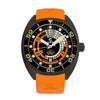
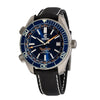
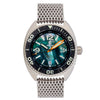
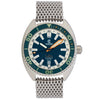
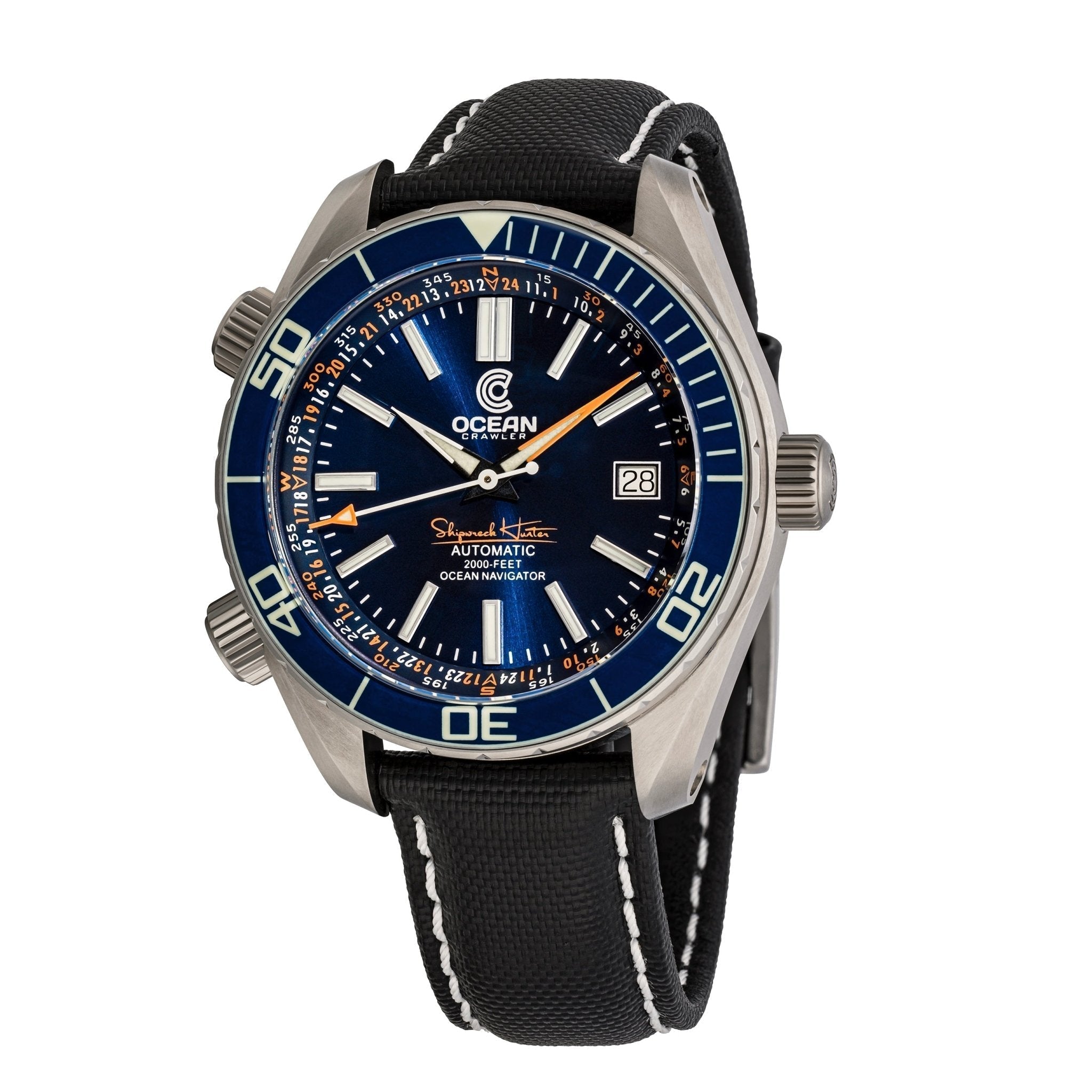
Here at Ocean Crawler, we manufacture watches that are built to endure and withstand. Out of our base in Charlotte, North Carolina, we run an assembly and test protocol that is meant to identify any flaws before the watch even gets to the consumer’s wrist.
Our watches are manufactured in America with high-quality Swiss automatic movements, most notably the Sellita SW200-1 movement, which is present in many of our watches. We selected this movement due to its durable design and global availability. We feel that when one purchases a professional dive watch, they should know that parts for this watch can be found many years later.
Since we concentrate on producing small quantities, we have tight quality control. Each timepiece that leaves our plant goes through individual calibration to ensure maximum accuracy in its time-telling function. There is also shock testing done specifically to ensure that the movement of the timepiece sits firmly. We do pressure tests to ensure that our watches’ resistance levels to water are valid.
Our watches can withstand extreme conditions due to our use of Swiss movements and our incorporation of 316L stainless steel cases, heavy sapphire crystals, and Swiss Super-LumiNova. Our watches are also guaranteed for five years by the manufacturer.
Can a Swiss Automatic Watch Become a Family Heirloom?
An automatic watch becomes a family heirloom because of its robust mechanical construction, ability to last through repairs, and sentimental value. The watch does not have to be the most expensive watch in the world for it to be an heirloom; all it has to do is be made well enough to survive.
In order to qualify as an heirloom, there should be proper documentation and care. Maintaining the watch by preserving the original service history, keeping the box, and servicing it ensures that it becomes infinitely easy for the future generation to understand and maintain the watch. The aging process of the watch usually adds to the story of the watch. An excellent case protects the pristine movements inside while the exterior ages gracefully with the wearer.
How to Make Your Automatic Watch Last for Decades
Owners need to carry out simple preventive maintenance for their mechanical watches to make sure that they continue functioning as working tools and not as useless trinkets.
|
Longevity Factor |
Why It Matters |
|
Movement serviceability |
Makes worn internal components repairable or replaceable over decades. |
|
Sapphire crystal |
Helps resist everyday scratching to keep the dial highly legible. |
|
Case construction |
Protects the delicate movement from physical external damage. |
|
Water resistance |
Helps prevent moisture from entering and rusting the steel movement. |
|
Gasket maintenance |
Preserves the case's factory water resistance as rubber seals age. |
|
Shock protection |
Reduces the mechanical risk from sudden drops or impacts. |
|
Regular servicing |
Cleans away debris, replenishes lubrication, and preserves accurate timekeeping. |
|
Parts availability |
Makes long-term repair practical, affordable, and accessible. |
Practical Maintenance Checklist:
-
Make Sure That The Crown Is Screwed In: Make sure that your screw-down crown is screwed properly into the case before taking a dip in the water or washing your hands.
-
Test the Seals: Get the watch checked with a dry pressure test done by a watchmaker once a year or once in two years if you go diving or swimming with the watch.
-
Rinse in Fresh Water: After the watch is exposed to seawater or chlorine in pools, rinse the watch in fresh water.
-
Avoid Magnets: Do not allow your watch to be close to heavy speakers, magnets in tablets, and scans from the medical world.
-
Timekeeping Change: If your watch starts gaining time by several minutes per day, don't wait until you schedule servicing for it.
Swiss Automatic Watches and Long-Term Value
In regard to the future value of the Swiss automatic watch, one must keep in mind that there is a difference between investing money and using the watch. Although there are some watches that vary in price on the secondary market, the real value of a mechanical watch is in the watch itself.
Value comes from craftsmanship. This is in the peace of mind that comes from having a machine that works, can be repaired, doesn’t need any software updates, and won’t become obsolete in three years. The emotional value of having the same dial for a decade of diving and traveling is more important than the money aspect of a watch.
Key Takeaway
The longevity of generations in a watch is not a random phenomenon. It is a consequence of the conscious selection of a very usable automatic Swiss mechanism, embedding it in durable components such as 316L steel and sapphire crystal, as well as maintenance of the mechanical system in a timely manner. By comprehending the way gaskets wear out, the reasons behind drying up of lubricants, and the work of the watchmaker in the process of servicing, you will maintain your watch precisely all your life.
If you want to see a mechanical watch designed to be rugged, well-maintained, and possibly passed down at some point, consider checking out the Ocean Crawler collection today. You can also talk to our staff about how our watches are engineered and tested here in the USA.
Frequently Asked Questions
How long do Swiss automatic watches last?
With proper maintenance and servicing from a watch repair professional, a quality Swiss automatic watch will last for many years. Since mechanical watches have been engineered to be taken apart, cleaned, and fixed, they tend to outlast their first owner and get passed on through many generations.
Can an automatic watch really last for generations?
Yes, an automatic watch will last through generations due to the ability to replace individual worn-out parts, including mainsprings and reverser wheels. All that is required is the availability of the replacement parts and the ability of the case to protect the movement from excessive water damage.
How often should a Swiss automatic watch be serviced?
These depend on the particular movement of the watch and its wear and tear conditions. Typically, every five to seven years, a complete mechanical service is suggested to remove metal particles that accumulate inside and replace lubricants that deteriorate due to wear and tear. Water-resistance gaskets of diving watches need to be tested annually for pressure resistance.
Are Ocean Crawler watches assembled in the United States?
Indeed, we manufacture the watches in our factory located in Charlotte, North Carolina. Each watch is subjected to individual regulation, testing, and pressurized testing in smaller lots to ensure that it conforms to our high standards of durability and performance.
Can I buy Ocean Crawler watches from outside the United States?
Sure, Ocean Crawler is available for international shipping from our U.S. warehouse. Regardless of where you are based, you can order our professional diver watches along with 5 years' worth of warranty.