Sep 01 , 2026
A watch can say 200 meters on the dial, have a rotating bezel, and look every bit like a dive watch. That still does not tell you whether it meets the international standard for divers’ watches.
ISO 6425 is the standard that defines requirements and test methods for watches designed for underwater diving. The current edition, ISO 6425:2018, covers more than water resistance. It addresses dive-time indication, visibility in darkness, magnetic resistance, shock resistance, salt-spray resistance, water-pressure testing, condensation, and attachment strength. The standard applies to divers’ watches designed to withstand diving to at least 100 meters and equipped with a secured system for indicating dive time that is visible in darkness.
That distinction gives you a much better way to evaluate a dive watch. A high water-resistance number is useful. So are a screw-down crown, strong lume, sapphire crystal, and a unidirectional bezel. But the real question is how the complete watch is designed, tested, and documented.
What Is ISO 6425?
ISO 6425 is the international standard for divers’ watches. It defines requirements and test methods intended to establish whether a watch is suitable for underwater diving and what markings a manufacturer may use when those requirements are met. ISO 6425:2018 is the fourth edition and was reviewed and confirmed by ISO in 2024, so it remains the current edition.
The standard starts with a basic requirement: a diver's watch must be designed to withstand diving to a depth of at least 100 meters and must have a secured diving-time indication that can be seen in darkness. From there, the standard tests the watch as a complete underwater timing instrument rather than treating water resistance as the only concern.
There is also an important terminology point. ISO creates the standard; ISO does not certify watches. ISO states that it does not perform certification or issue certificates. When a product receives independent certification to an ISO standard, that assessment is performed by an external conformity assessment or certification body.
That is why "ISO 6425 compliant," "tested to ISO 6425," and "ISO 6425 certified" should not automatically be treated as interchangeable claims.
What Makes a Watch a Real Dive Watch?
A genuine dive watch combines water resistance with features and testing intended for underwater timing.
For an ISO 6425 diver’s watch, the requirements include:
-
A minimum stated diving capability of 100 meters
-
A secured diving-time indicator
-
Readability of essential information in darkness
-
Resistance to magnetic fields
-
Shock resistance
-
Resistance to salt-spray exposure
-
Water-resistance testing at pressure
-
Condensation testing
-
Resistance of the attachment system to external force
For an analog watch, the familiar unidirectional rotating bezel is the common solution for elapsed dive time measurement. ISO 6425 does not define "dive watch" as "a watch with a bezel" alone. The standard describes a diving-time indicator that must be protected against inadvertent manipulation and capable of indicating at least 60 minutes with one-minute resolution or better.
That is an important distinction. A rotating bezel can be a strong visual cue, but the underlying purpose is controlled timing underwater.
What Does ISO 6425 Test?
ISO 6425:2018 covers several different forms of testing. The exact test sequence is much broader than a simple pressure check.
|
Requirement |
Why It Matters Underwater |
|
Diving-time indicator |
Gives the diver a way to track elapsed time |
|
Visibility |
Keeps essential information readable in low light and darkness |
|
Magnetic resistance |
Helps prevent magnetic fields from causing unacceptable timekeeping effects |
|
Salt-spray resistance |
Tests resistance to a marine environment |
|
Shock resistance |
Tests the watch after impact-related stresses |
|
Water resistance |
Tests the case and water-resistance system under pressure |
|
Crown and setting-device resistance |
Tests whether external controls can withstand applied force under pressure |
|
Condensation resistance |
Detects moisture entering the case |
|
Attachment resistance |
Helps ensure the watch remains attached to its band or bracelet |
The 2018 standard specifies that the diving-time indicator must be readable with at least 50 lux in light. In darkness, after the specified light exposure, essential indications must remain visible and readable at 25 cm. The minute and hour indications must be distinguishable, dive time must be readable within a specified tolerance, the five-minute markings must be visible on analog displays, and there must be an indication that the watch is running.
Magnetic and shock resistance are also incorporated through other ISO standards. ISO 6425 references ISO 764 for magnetic resistance and ISO 1413 for shock resistance.
The standard also includes salt-spray testing with a bracelet, water-resistance tests, condensation testing, and an attachment test in which the closed bracelet or strap system is subjected to external force.
Why Water Resistance Alone Does Not Make a Dive Watch
A 200m water-resistant watch is not automatically an ISO 6425 dive watch.
Water resistance tells you something important about the watch, but the number on the case or dial does not describe the entire dive-watch specification. ISO 6425 adds requirements for timing, visibility, environmental resistance, shock, magnetism, water-pressure testing, and more.
That means there are three different ideas worth keeping separate:
-
A water-resistance rating describes a pressure-resistance claim.
-
Dive-watch design describes how a watch is built and equipped for underwater timing.
-
ISO 6425 compliance or certification refers to meeting the requirements and tests defined by the standard, with certification involving an external body when certification is claimed.
A manufacturer may build a watch with substantial water resistance and many dive-watch features without having the model independently certified to ISO 6425. That does not automatically make it a bad dive watch. It does mean you should not assume certification where the manufacturer has not documented it.
ISO 6425 vs Water Resistance Ratings
|
Feature |
Water-Resistant Watch |
Dive Watch |
ISO 6425 Dive Watch |
|
Water resistance |
Yes |
Yes |
Yes |
|
Designed for underwater timing |
Not necessarily |
Yes |
Yes |
|
Secured dive-time indication |
Not necessarily |
Expected |
Required by the standard |
|
Underwater legibility |
Not necessarily |
Expected |
Tested |
|
Pressure testing |
Varies |
Expected |
Standardized testing applies |
|
Magnetic and shock requirements |
Varies |
Varies |
Requirements apply |
|
Marine-environment testing |
Varies |
Varies |
Salt-spray testing applies |
|
ISO 6425 compliance |
No |
Not necessarily |
Yes, when requirements are met |
|
Third-party certification |
Not applicable by default |
Not necessarily |
Only when independently certified |
The middle column matters because "dive watch" is also a product category with established design conventions. Historically, watches in the category existed before ISO 6425, and many respected dive watches are built around the same functional principles without carrying a third-party certification claim.
What Features Should a Proper Dive Watch Have?
A Unidirectional Timing Bezel
The bezel lets a diver track elapsed time without using a separate stopwatch.
A unidirectional design provides an important fail-safe. If the bezel is accidentally knocked during a dive, it can move in the direction that makes the elapsed time appear longer rather than shorter. The point is not decoration. It is preventing an accidental movement from making remaining time appear greater than it really is.
ISO 6425 allows different forms of diving-time indicators, but for mechanical analog dive watches, the unidirectional bezel has become the standard practical solution.
High Underwater Legibility
Sunlight disappears quickly underwater, suspended particles reduce contrast, and darkness increases with depth. A dive watch needs a dial that can be read quickly rather than admired slowly.
ISO 6425 specifically addresses visibility in darkness, including distinguishable hour and minute indications, readable dive-time markings, and an indication that the watch is running.
That is where Lume earns its place. Strong lume is useful because it converts a traditional mechanical watch into something that can still communicate essential information when ambient light is poor.
A Secure Crown
The crown is one of the places where water resistance can be compromised, which is why dive watches commonly use screw-down crowns and carefully engineered sealing systems.
A screw-down crown is an important design feature, but it should not be treated as an automatic qualification for ISO 6425. A crown does not make a watch a dive watch by itself. ISO 6425 instead tests the resistance of relevant crowns and other setting devices under defined conditions.
A Strong Crystal and Case
The crystal protects the dial while the case keeps pressure, moisture, and external stresses away from the movement.
Sapphire is common in modern mechanical dive watches because of its high scratch resistance. It is a practical choice for watches that may contact rock, equipment, boat hardware, or other abrasive surfaces. But sapphire alone does not establish ISO 6425 compliance.
Case construction matters just as much. Gaskets, crown interfaces, crystal seating, caseback construction, and overall tolerances all contribute to keeping the movement isolated from water and pressure.
A Reliable Movement
A mechanical dive watch needs a movement that can maintain its intended timekeeping performance under real-world conditions.
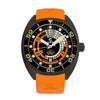
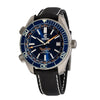
Ocean Crawler's current Core Diver models, for example, use Swiss-made Sellita SW200-1 automatic movements, while published specifications for current Core Diver models include a unidirectional 120-click sapphire bezel, 316L stainless steel case, sapphire crystal, and 600-meter water resistance.
Those are useful specifications to evaluate, but they should remain separate from a claim of ISO 6425 certification unless that certification is documented.
How Is a Dive Watch Pressure Tested?
Pressure testing places the watch in controlled conditions that simulate underwater pressure.
Under ISO 6425:2018, the main overpressure test applies a pressure corresponding to 125% of the manufacturer's stated diving depth, expressed through the standard's pressure formula. The watch is held at that overpressure for 120 minutes, then pressure is reduced and held at a lower level before the watch undergoes the required inspection and condensation testing.
For a watch rated to 200 meters, that means the principal overpressure test is performed at a pressure corresponding to 250 meters under the standard's test method.
That does not mean a "200m" watch is a recommendation to dive to 200 meters.
Watch depth ratings come from controlled testing, while real dives involve movement, temperature changes, equipment contact, aging seals, and other factors. A dive watch's rating should therefore be treated as part of its specification, not as a personal diving limit.
PADI also describes a dive watch as a backup timing instrument rather than a replacement for a dive computer.
What Do 200m, 300m and 600m Water Resistance Actually Mean?
In watch specifications, meters describe a pressure-resistance rating rather than a simple promise that the wearer can descend to that exact depth under every condition.
Bar and atm are pressure units commonly used alongside meter ratings. A 600-meter rating is commonly expressed as 60 ATM, while 200 meters is 20 ATM. Ocean Crawler's current Core Diver and Ocean Navigator models, for example, are listed at 600 meters, 2,000 feet, or 60 ATM.
The 600-meter figure is meaningful because it indicates a much higher tested pressure capability than a 100m or 200m rating. It does not, however, turn the watch into a substitute for a dive computer or diving plan.
The same principle applies at 300 meters and 200 meters. The number tells you about the watch's specified pressure resistance. Your actual diving equipment and training determine how a dive should be conducted.
Are all dive watches ISO 6425 certified?
No.
A watch can be designed as a dive watch, carry a substantial water-resistance rating, and use conventional dive-watch features without being independently certified to ISO 6425. Some major dive-watch manufacturers have historically followed ISO-style requirements without seeking external certification for every model.
There is also a useful difference between compliance and certification.
A manufacturer may state that a model is built or tested to ISO 6425 requirements. Certification is a separate conformity-assessment claim. Because ISO itself does not certify products, a genuine third-party certification claim should identify who performed the certification.
That gives buyers a straightforward rule: look for documentation rather than assuming that the word "diver" means ISO certified.
How Ocean Crawler Approaches Dive Watch Design
Ocean Crawler's current lineup shows why it is useful to evaluate a dive watch by its individual specifications rather than by its marketing category.
The Core Diver collection currently lists 600-meter water resistance, Swiss automatic movements on current models, sapphire crystal, and a 120-click unidirectional rotating bezel.
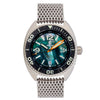
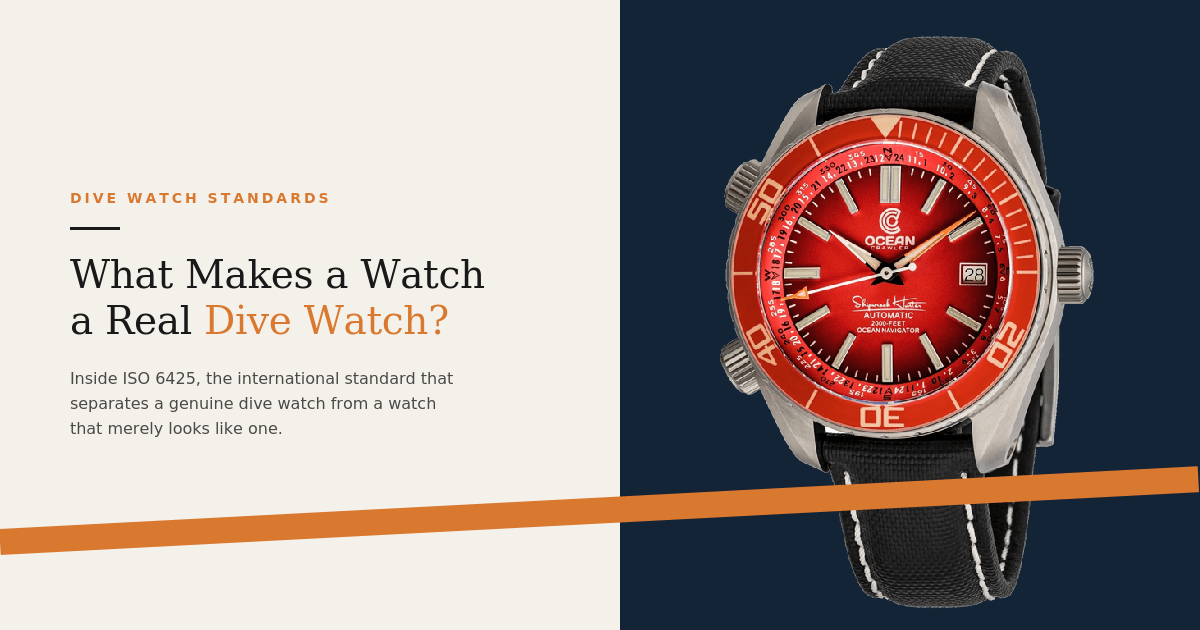
The Ocean Navigator takes a different approach with a titanium case while retaining a 600-meter rating, sapphire crystal, a unidirectional dive bezel, Swiss Sellita SW200-1 automatic movement, and an individual water-resistance testing claim on the current V3 product page.
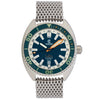
The Dream Diver similarly combines a 600-meter rating, 120-click unidirectional bezel, sapphire crystal, Swiss automatic movement, helium escape valve, and published shock-resistance specification.
Those specifications demonstrate the design priorities of a serious mechanical dive watch: pressure resistance, readable timing, strong materials, and a movement suited to a mechanical tool watch.
They should still be evaluated separately from an ISO 6425 certification claim. Ocean Crawler's product pages reviewed for this article document the listed specifications and pressure-testing claims, but they do not establish an independent ISO 6425 certification for the models cited above. That distinction is worth preserving.
How to Choose a Dive Watch
Start with the intended use rather than the biggest number printed on the dial.
Check:
-
Water-resistance rating. Choose a watch appropriate to the type of water activity you intend to perform.
-
Dive-time indicator. For an analog watch, look for a clearly marked, secure unidirectional bezel.
-
Legibility. Check the contrast between the hands, markers, dial, and bezel.
-
Lume. Look beyond daytime photographs and consider whether the important indications remain readable in darkness.
-
Crown construction. A screw-down crown is common on serious dive watches, but look at the complete sealing design.
-
Crystal and case. Sapphire, case material, crystal thickness, and overall construction can tell you more than styling alone.
-
Movement. Consider accuracy, serviceability, power reserve, and the manufacturer's stated specifications.
-
Strap or bracelet. The watch needs to remain securely attached during use.
-
Testing documentation. Find out whether the manufacturer performs individual pressure testing, type testing, or testing against a named standard.
-
ISO 6425 status. If certification matters to you, look for a specific, documented certification claim rather than assuming it from the water-resistance rating.
For a buyer comparing a 200m dive watch with a 600m model, the deeper rating is not automatically the better choice. It depends on the intended use, physical design, comfort, readability, and the quality of the evidence supporting the specifications.
Common Dive Watch Myths
200m means I can dive to 200 meters.
Fact: A 200m rating describes a tested pressure-resistance specification. It is not a complete dive plan or a guarantee of suitability for every real-world condition at exactly 200 meters.
Every dive watch is ISO 6425 certified.
Fact: No. Dive watches existed before ISO 6425, and many modern watches are designed around dive-watch principles without third-party certification.
Water resistance never decreases.
Fact: Water resistance depends on components such as seals and case interfaces, and those components can age or be damaged. A watch used regularly around water should be maintained according to the manufacturer's recommendations.
A screw-down crown makes a watch a professional dive watch.
Fact: A screw-down crown helps secure the case, but it is only one component of a complete underwater watch design.
A rotating bezel is enough.
Fact: A bezel alone proves very little. Its function, security, readability, and relationship to the rest of the watch all matter.
A dive watch is only useful for professional divers.
Fact: Modern divers commonly rely on dive computers, and a mechanical dive watch may function as a backup timing instrument as well as a piece of dive equipment and everyday wear.
Key Takeaway
A properly specified dive watch is built around a simple idea: underwater timing should remain possible when pressure, darkness, impact, temperature changes, and saltwater are all part of the environment.
ISO 6425 gives buyers a technical framework for judging that claim. It also provides a useful reminder that 600 meters on a dial is only one specification, while a real dive watch is an entire system of case construction, timing, visibility, testing, and reliability.
Ocean Crawler's current Core Diver, Ocean Navigator, and Dream Diver collections illustrate how those priorities appear in modern mechanical dive watches, with published 600-meter ratings and purpose-built timing features.
When comparing watches, look past the depth number. Read the technical specifications, check the testing claims, and verify exactly what the manufacturer says the watch is designed and tested to do.
Frequently Asked Questions
What does ISO 6425 mean on a watch?
ISO 6425 identifies the international standard for divers' watches. ISO 6425:2018 defines requirements and test methods covering underwater performance, dive-time indication, visibility, magnetic and shock resistance, salt-spray resistance, water resistance, condensation, and attachment strength. A manufacturer using the standard should distinguish compliance from third-party certification.
Is ISO 6425 certification important for a dive watch?
ISO 6425 certification can provide useful evidence that a specific watch has been independently assessed against the standard. However, certification is not the same thing as simply having a 200m or 600m water-resistance rating. Buyers should also examine the manufacturer's specifications, testing information, maintenance guidance, and intended use.
What makes a watch a true dive watch?
A true dive watch is designed for underwater timing and combines meaningful water resistance with features such as a secured diving-time indicator, strong underwater legibility, and a case and movement built to handle demanding conditions. ISO 6425 provides a formal set of requirements and tests for divers' watches.
Is a 200m watch suitable for scuba diving?
A watch rated to 200 meters has substantially more water resistance than many watches intended only for everyday exposure to water, and 200 m is common among dive watches. Suitability still depends on the manufacturer's stated use and testing. A dive watch should also be treated as a backup timing device, not a replacement for a dive computer.
Are all dive watches ISO 6425 certified?
No. Some watches are designed and tested around ISO 6425 requirements without being independently certified. ISO itself does not certify watches. If a manufacturer claims third-party certification, the certifying organization should be identified in the supporting documentation.
What is the difference between ISO 6425 and water resistance?
Water resistance is one part of dive-watch performance. ISO 6425 covers water resistance along with dive-time indication, visibility, magnetic resistance, shock resistance, salt-spray exposure, attachment strength, and other tests. A high water-resistance rating by itself does not establish ISO 6425 compliance.
Can you dive with a watch that is not ISO 6425-certified?
A lack of third-party ISO 6425 certification does not automatically mean a watch is unsuitable for diving. Some established dive watches are not independently certified. The important questions are whether the watch is specifically designed for diving, what its manufacturer documents, what testing it has undergone, and whether its stated limitations match your intended use.