Aug 18 , 2026
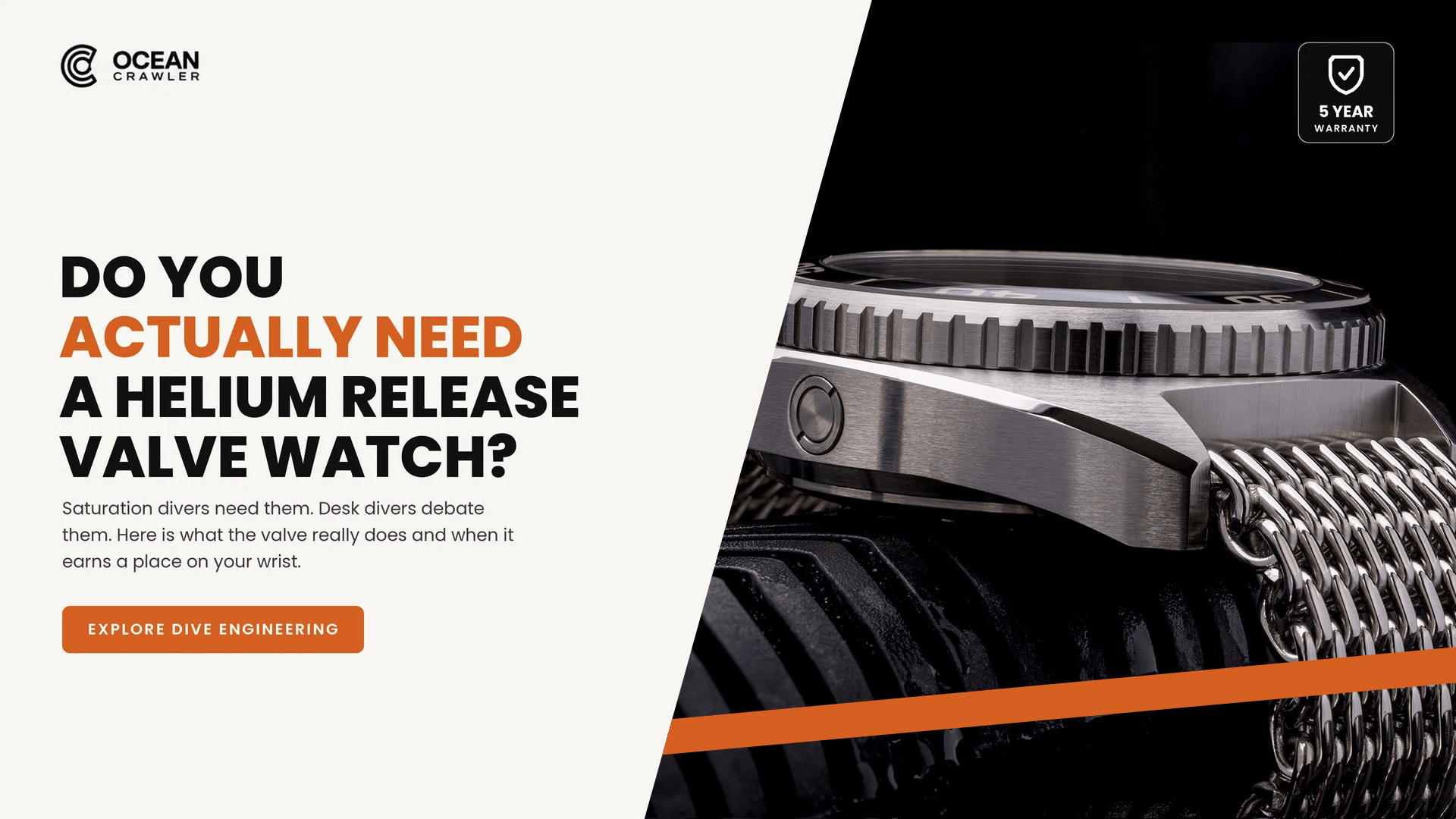
On the side of a serious professional dive watch, you may notice a tiny little circle shape near the nine o'clock position. This is a helium release valve. But we need to know: Do we need a helium release valve in a dive watch?
The short answer is no. Most common recreational diving doesn't require it. It's more of a tool for saturation diving, when you have to stay inside a chamber with a helium-rich mixture at a certain pressure. So in your case, if you don't do that kind of diving, you don't need it.
Despite this, the helium escape valve remains one of the best-kept mysteries in horology. Some purchasers would have you believe that it makes the timepiece more waterproof or even more fit for weekend scuba adventures. Let’s examine the mystery of the helium release valve and its purpose.
What Is a Helium Release Valve on a Watch?
A helium release valve, sometimes referred to as a helium escape valve, is a one-way valve in the case of some professional diver's watches that allows the escape of helium gas that has diffused into the case during dives in which the diver is exposed to helium-rich environments.
When working at a great depth, professional commercial divers are inside a chamber or a vessel called a diving bell or habitat. This is necessary to avoid the effects of nitrogen narcosis and oxygen toxicity by significantly reducing inert gas pressure. The breathing gas mixture in such a habitat contains a considerable amount of helium. Such a dive has one essential challenge not present in ordinary diving.
How Does a Helium Escape Valve Work?
Helium atoms are relatively small. With an atomic radius of 0.49 angstroms, they are much smaller than a water molecule. This means that a helium gas can infiltrate dive watches’ rubber gaskets, bypassing them over a long period of time.
Although the diver is inside the pressurized habitat, the pressure in the watch will eventually balance out with the pressure in the habitat. This is not a problem until the diver escapes back to the surface of the water.
While the decompression process is occurring, the pressure inside the diving bell slowly drops back down to normal atmospheric pressure. Meanwhile, the helium that was forced into the watch casing cannot quickly escape the watch through the water-tight seals.
If internal pressure becomes much greater than outside pressure, the trapped gas will look for an exit. It usually results in the crystal violently popping off the case.
A helium escape valve is a small spring mechanism that, when the pressure inside the case becomes higher than the outside pressure by a predetermined amount, opens up and lets gas escape until the pressure equalizes and it closes again, preventing loss of helium inside the watch case.
Why Do Saturation Divers Need a Helium Release Valve?
Saturation diving represents a particular case of commercial diving. Saturation divers perform the work at substantial depths, for example, on oil platforms or pipelines. Rather than returning to the surface for their shifts, these divers live in a pressurized habitat for weeks at a time. The pressure in the hab is maintained at the same level as the pressure at the depth where they are working.
Because they have been breathing a helium-rich gas for days, the watches take in some of the gas as well. The watch must be released from the gas slowly during the decompression period at the end of the mission. A helium release valve is the only sure way to prevent the watch from exploding due to the trapped helium gas.
Do Recreational Scuba Divers Actually Need One?
No, a recreational diver doesn't need a helium release valve. Ordinary, everyday scuba diving is really completely different from the saturation diving that they were doing. As a sport diver, you don't go around with a tank on your back pressurized with helium and spend days in a dry, high-pressure, helium-saturated environment.
Because your watch will never be subjected to high-pressure helium gas, it can't get trapped inside the case. As such, there's nothing for the helium release valve to do. In other words, for normal recreational diving, it's completely unnecessary, but a cool engineering feature nonetheless.
Helium Release Valve vs. Water Resistance
A common misconception is that a helium valve makes a watch more waterproof. In reality, the two concepts are entirely separate.
Water resistance refers to a watch’s ability to keep water from penetrating the case with a specific level of pressure. It is ensured by the case’s gaskets, screw-down crown, and thick crystal. However, dive watches undergo the most rigorous testing, including complying with the ISO 6425 standard, to guarantee that they are water-resistant enough to withstand diving.
A helium release valve is actually doing the opposite by letting the gas out. The valve itself has nothing to do with keeping water out; rather, it's a precision-engineered aperture in the side of the case that is also sealed by a spring. To create this kind of opening defeats the purpose of having a waterproof watch, so it has to be done in such a way that it doesn't compromise the overall water resistance of the timepiece.
Does a Helium Release Valve Make a Dive Watch Better?
A helium release valve does not make a dive watch objectively better for everyday use, but it does make it more complex.
Practically speaking, the average buyer does not need it. On the other hand, a watch with a working helium release valve is a great demonstration of engineering know-how, which implies that the manufacturer is capable of making a case strong enough to keep the gas out, thus withstanding the pressures of commercial saturation diving.
Many people value the item for its prestige and power. Even if you don't use it, you know that owning something that is designed to withstand the highest conceivable underwater pressures is a huge draw.
Who Actually Needs a Helium Release Valve?
Here is a simple breakdown of who actually relies on this technology:
|
Diver Type |
Likely Need |
Why |
|
Recreational scuba diver |
No |
Standard depth; breathes compressed air or nitrox. |
|
Technical diver |
No |
Does not live in a pressurized, helium-filled habitat. |
|
Saturation diver |
Yes |
Lives in pressurized helium environments for days or weeks. |
|
Professional/commercial diver |
Varies |
Required only if performing saturation dives. |
|
Watch collector |
No |
Desired for engineering appreciation, not practical survival. |
Which Ocean Crawler Watches Have a Helium Release Valve?
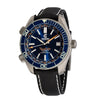
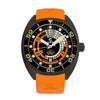
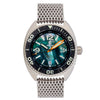
At Ocean Crawler, we make mechanical diving watches that can withstand the toughest conditions. We also make some of our watches with an automatic helium release valve for those that need to do saturation dives.
-
Ocean Crawler Core Diver: The Core Diver V4 is a professional diving timepiece. Apart from the 600-meter water resistance and screw-down crown, most models also have an automatic helium release valve at 9 o’clock to let them reach such depths.
-
Ocean Crawler Dream Diver: A dream diver made for cold places and deep water, the Dream Diver Polar Ice has been pressure tested beyond two thousand feet to show that its case construction makes it a serious dive tool for pros that want to focus on the work at hand rather than style and superficiality. The automatic helium escape valve ensures that the dive will be safe, despite the depth and cold.
You can view them on our respective product pages to see how the valve is integrated into the 316L stainless steel case designs.
What Should You Look for in a Dive Watch?
If a helium escape valve is not a priority for the everyday diver, which features are worth considering? When purchasing from our dive watch collection, you have to keep in mind what functionality you need most:
-
Water Resistance: Get one that has a water resistance of at least two hundred meters; it’ll be good enough for scuba diving. If you find one with six hundred meters or more, it’ll give you an added safety margin against pressure.
-
Screw-Down Crown: This is critical. A screw-down crown has a thread that tightens against the case, compressing a rubber gasket to protect the movement from water.
-
Unidirectional Bezel: A 120-click unidirectional rotation bezel, which is a safe way to measure time elapsed. In the unfortunate case that the watch is accidentally twisted, the bezel will only shorten the dive and never add time to the dive.
-
Luminescence: Underwater visibility decreases rapidly. Pay attention to the quality of the luminous paint on the hands, indices, and bezel pip. Some Swiss Super-LumiNova C3 is a great choice.
-
Thick Crystal: Sapphire crystal is the most scratch-resistant, but it has to be thick enough to withstand the pressure underwater.
So, Do You Actually Need a Helium Release Valve?
Ultimately, if you are reading this, you do not need a helium release valve watch. This is an extremely specific fix for an extremely specific issue that only commercial saturation divers encounter.
However, that does not mean that you should stay away from watches that have them. Helium escape valves are a sign of proper professional watchmaking. They show dedication to the creation of the tool watches, capable of enduring the toughest conditions known to man.
If you love complicated mechanical watches with all the bells and whistles, you need a helium valve watch.
FAQs
What is a helium release valve on a watch?
A helium release valve is a form of a one-way valve, usually found in the case of a dive watch, allowing excess helium that has been forced into the watch during dives to escape, preventing the crystal from popping off the watch.
How does a helium escape valve work?
The valve is held closed by a small spring. If the gas pressure inside the watch exceeds ambient pressure (as occurs when diving to great depths), the spring is pushed back, allowing the trapped helium to escape until the pressure inside is equalized.
Can helium damage a dive watch?
Helium gas itself will not harm the movement or any other component. The problem arises when trying to depressurize the case if helium is trapped inside. The trapped helium will expand and push the crystal off the watch.
Is a helium release valve necessary for scuba diving?
No, because recreational divers are using either compressed air or nitrox and never spend days in pressurized diving bells. The dive watch is never subjected to a high-pressure helium environment, so the valve is completely unnecessary.
Does a helium release valve make a watch more waterproof?
No. A valve to let helium atoms escape does not prevent water from entering the watch. The water resistance is achieved through the thickness of the case, gaskets, screw-down crown, and the crystal.
Why is the helium valve usually located on the side of the case?
The 9 o'clock position on the left of the case is the most common to put the valve, as it is the farthest from the crown while still being relatively easy to reach without interfering with the movement of the bracelet.