Aug 25 , 2026
When your dive watch says 600 m, is there actually any chance that you can take it to 600 meters?
For most watch enthusiasts, diving to nearly two thousand feet is a concept best left to the imagination. The 600m dive watch is a holy grail for some and has become an aspirational category of its own. Beyond a certain point, recreational water resistance becomes serious business.
The truth about diving watches, their specifications, and the depths to which they were developed is a surprising one. Between testing in controlled environments and the realities of diving itself, there is a wide range between what manufacturers say and what the consumer may expect.
To distinguish marketing from mechanics, we need to understand the physics behind survival. First, you need to know what a "600 m" marking means, how the dive watch is subjected to pressure testing, and why depth rating is not as simple as it seems.
What Does 600m Water Resistance Mean on a Dive Watch?
A 600m rating for a dive watch means that it is suitable for diving up to 600m in all conditions. The stated depth rating is actually a measurement of static pressure, not distance, established by the manufacturer in its laboratory during the rating process. In other words, a 600m dive watch should theoretically be able to withstand the pressure of being immersed in water six hundred meters deep (which is equivalent to approximately 2,000 feet, 60 ATM, or 60 bar).
The 600-meter depth rating on a dive watch does not mean that the timepiece is capable of diving to a depth of 600 meters! In fact, what it really means is that the watch has been tested to a certain increase in pressure, as stated by the manufacturer. This increase in pressure is measured in atmospheres or atm (or bars or psi). The watch's depth rating in meters or feet is simply a calculation based on pressure.
Here is a simple breakdown of how dive-watch ratings translate to practical applications:
|
Rating |
Approx. Pressure |
Common Interpretation |
|
100m |
10 ATM |
Surface swimming, snorkeling; minimal diving applications. |
|
200m |
20 ATM |
Suitable for serious water use and standard recreational scuba diving. |
|
300m |
30 ATM |
Professional-grade dive-watch territory; built for heavy impact. |
|
600m |
60 ATM |
Deep-diving watch rating; engineered for extreme hydrostatic pressure. |
|
1,000m+ |
100 ATM+ |
Extreme-depth dive-watch rating; often utilized for saturation diving. |
Everyday “waterproof” claims are misleading in horology. Dive watches are measured in realistic depth ratings, and a 600m water resistance is already exceptionally tough.
Pressure Tested vs. Depth Rated: What's the Difference?
A depth rating is the water resistance a watch is officially rated for by the manufacturer, most often noted on the dial. A pressure test is a lab test where a watch is subjected to either air or water pressure to simulate its ability to be resistant to certain depths.
These two terms are frequently confused, but they serve different purposes.
Depth Rated: This simply means a minimum requirement. In this case, if a watch is depth rated to 600 m, that simply means the manufacturer states that they created the watch to be able to endure 60 atm of pressure. It is a statement of what the watch is capable of.
Pressure Tested: This refers to the actual manufacturing and quality control process. A pressure-tested dive watch has been physically put into a chamber and pressurized. However, it is unclear how many watches were actually tested to the maximum and not all brands likely test using the same parameters.
The confusion is caused by the fact that a watch must be pressure tested to establish its depth rating, but the depth rating is a theoretical value and the test is actually the verification.
How Is a Dive Watch Pressure Tested?
Dive watches are pressure tested in specialized laboratory chambers using air or water. The watch is subjected to controlled static pressure mimicking specific depths for a set duration, then checked for leaks or condensation, ensuring the crystal, caseback, and gaskets maintain their structural integrity.
The modern pressure testing process generally follows a multi-step sequence:
-
Dry Testing (Air Pressure): The timepiece is placed in a chamber and pressurized. Micro-sensors then calculate the amount of flex in the watch case. If there’s an unacceptable flex, it means there’s a leak and the gaskets are faulty in one of the watch’s seals.
-
Wet Testing (Water Immersion): For watches that are rated for extreme depths of water, the timepiece is placed in a hyperbaric chamber and submerged in water. The chamber is then pressurized to the desired depth (for instance, 60 atm for a watch rated to be worn at 600 meters below sea level).
-
Condensation Testing: After the wet testing, the timepiece is placed on a hot plate and a small amount of cold water is placed on the glass. If condensation appears inside the crystal, it means that water has gotten past the seals and the watch is considered faulty.
What Does ISO 6425 Have to Do With a 600m Dive Watch?
ISO6425 is an international standard that defines requirements for diver’s watches. According to this standard, a watch needs to be pressure tested beyond the specified water resistance depth by at least 25%. Therefore, a watch with 600-meter water resistance needs to be tested at 125% of 600, which is 750 meters.
To be officially classified as a "diver's watch," according to ISO 6425:2018, it has to pass a number of rigorous tests in addition to simply being able to withstand the water pressure. A diver's watch needs to have:
-
A unidirectional elapsed-time bezel.
-
Luminous markers are visible in total darkness from 25 centimeters.
-
It is magnetic and shock resistant.
-
Resistant to saltwater corrosion.
-
The crown and pushers were tested while submerged in water.
While many 600m watches are made according to these standards, this does not mean that the watch is compliant with the standard. The difference is significant. A standard defines a reference that is common and necessary for the creation of a product.
Does 600m Really Mean You Can Dive to 600 Meters?
Not necessarily in the simplistic manner one might assume. Yes, a six hundred meter watch may withstand the pressure of being six hundred meters in the depths of a lab but the shocks of temperature changes during dives and the forceful impacts of diving can wreak havoc on a watch's gaskets.
If you were to lower a brand new six-hundred-meter dive watch on a specially designed rig to six hundred meters in the ocean, it would likely survive the trip. However, the human wrist is not as predictable.
The old argument that movement creates dynamic pressure in the watch, while not nearly as extreme as the "flailing your arms around creates ten times atmospheric pressure," is real; diving creates other hazards. Hazards such as banging the watch against the ladder of the boat, jumping or diving into colder water than your watch is used to (causing metals to contract and stress the rubber seals), and other impacts that can occur during the course of a dive that can lead to a gradual loss of waterproofness over time. A six-hundred-meter rating means you have an enormous safety margin on any dive you take, but it isn't advisable to take a five-year-old unserviced watch on six-hundred-meter dives.
How Much Pressure Is a Watch Facing at 600 Meters?
For every 10 meters you go down in the water, the pressure increases by 1 ATM / Bar. So, at 600 meters, your watch is being squeezed by 60 bars, or 870 pounds per square inch, trying to crush the case and get through the seals.
To put this into perspective, the atmospheric pressure at sea level is 1 ATM (absolute pressure). When diving underwater, the weight of the ocean exerts a gauge pressure on you. At 600 meters, the force exerted by the weight of the water on each square mm of your diver watch would crush it. If any of the gaskets fail at this depth, water will not simply trickle in. Water will violently implode into the movement, destroying it right then and there.
Why a 600m Dive Watch Needs More Than a Thick Case
Surviving sixty (60) ATMs requires precision engineering, not just materials. A six hundred meter (600m) diving watch needs properly compressed synthetic gaskets, extra-thick sapphire crystal glass, heavy-duty screw-down crowns, and even tolerance-reducing case construction to keep the water out as the case flexes slightly under pressure.
Deep-water resistance requires a holistic engineering approach:
-
Sapphire Crystal: Often 4 mm or thicker, domed to spread pressure equally across the case.
-
Gaskets (O-rings): Made from special rubber (such as Viton) and fitted on the case back, crown tube, and around the crystal. Multiple gaskets (on the crown, crown tube, and case back) that are made from a special, water-resistant rubber. The crown must be screw-in to make a tight seal.
-
Case tolerances: When a case is squeezed from all sides by the 60 or so atmospheres of pressure in a waterproof watch, poorly made cases will twist the crystal and case screws out of alignment, letting in water. To resist this pressure, a diver’s case has to be machined to very close tolerances.
How Ocean Crawler Approaches 600m Water Resistance
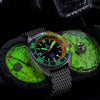
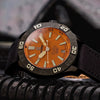
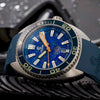
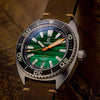
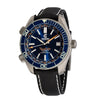
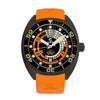
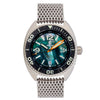
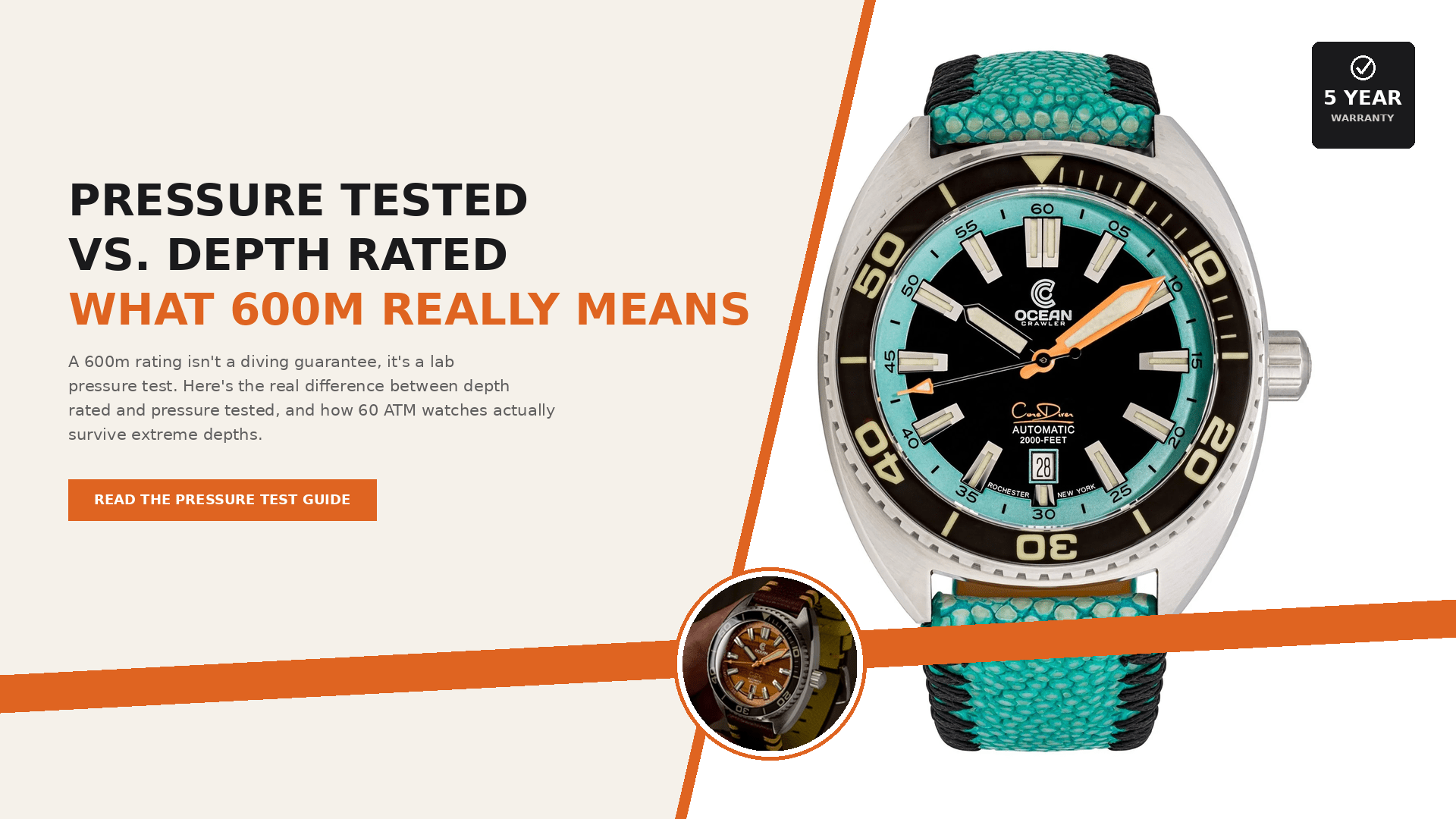
At Ocean Crawler, our 600m models utilize heavy-duty 316L stainless steel or titanium cases, along with specially domed sapphire crystal, and have been tested to extreme pressure to assure they can withstand the conditions of such depths.
Headquartered in Charlotte, North Carolina, we design our watches to be exceptionally robust. The core diver’s timepieces, including our entry-level 600-meter (2,000-foot, 60-atm) diver’s watch, have been tested to those same standards. We use precision-machined cases, sapphire crystal up to 4.5 mm thick, and multiple gaskets to make our watches resistant to the elements.
Because our watches rely on traditional mechanical movements, understanding how Swiss automatic watches actually work without batteries highlights why protecting these intricate calibers from water pressure is so critical. A breached case would ruin the carefully balanced hairsprings and escapements.
Therefore, every Ocean Crawler dive watch is subjected to extensive quality assurance testing to ensure that, when we say 600m, it really does mean 600m.
600m vs. 300m vs. 200m Dive Watches
A higher rating does not necessarily mean a watch is more "adequate" for every diver. A 200m watch would be ideal for a recreational diver doing some fun dives, a 300m watch would be more professional and offer a serious diver more assurance in his daily activity, and a 600m watch would feature thicker and stronger elements which are made to resist such extreme pressure.
-
200M Dive Watches: Typically thinner and lighter in weight. Perfect for 99% of all recreational diving.
-
300M Dive Watches: The standard in diver's watches. Offer increased margins of error for shock and temperature.
-
600M Dive Watches: Tool watches typically have a thicker case, a thicker sapphire crystal, and other features such as a Helium Escape Valve. Mostly popularized among enthusiasts of over-engineered mechanical marvels and serious technical divers who require watches to go deeper than just a weekend adventure.
Does a 600m Watch Need a Helium Escape Valve?
A helium escape valve (HEV) is required only in the case of professional saturation diving. Saturation diving involves living in a pressurized environment, often underwater. This environment uses a helium-rich gas for breathing, which is detrimental to standard dive watches, as helium atoms can infiltrate the watch through seals and cause the crystal to explode. A helium escape valve allows helium to leave the watch during decompression and thus avoid this complication.
Not every 600m dive watch needs/has a helium escape valve. If you are breathing compressed air or nitrox from a regular scuba tank, you aren't in a helium-saturated environment, and the gas won't make its way into your watch. The HEV is a specialized feature for commercial saturation diving. While it's an impressive feat of engineering, the casual recreational diver is just fine with a 600m rating on their dive watch.
How to Read a Dive Watch's Water-Resistance Rating
To read a diver's water resistance, look at your watch's specifications. It should state how many meters or feet it can withstand, or how many atmospheres or bars of pressure it resists. Check these figures against the manual that came with your timepiece to find out how to use and care for it.
A Quick Checklist:
-
Locate the Stated Depth: Look for "600M" or "60ATM" or "2000 FT."
-
Check the Crown: Know how to fully screw down the winding crown to make sure it's watertight.
-
Check how old the watch is: Water resistance is not a permanent characteristic. As time goes by, especially after ten years, the gaskets will dry out. A 600M watch that has not been serviced in ten years should be professionally tested by a watchmaker before going into the ocean.
Common Misconceptions About 600m Dive Watches
The most widespread myths that divers have about the water resistance of their watches are that having a watch rated for 600 meters of immersion ensures that it can be used at 600 meters regardless of the watch’s condition or how old it is.
Another myth is that the deeper the watch’s case is, the higher its water resistance, and finally, that the watch does not need any maintenance if it has been tested under pressure.
-
"600m means I can take it to exactly 600m today," only if the case was just opened, the crown is tight, and there is no temperature shock.
-
"A case that is thicker than another one means it will be more water resistant." The thickness and engineering tolerances play a bigger role than the material of the case.
-
"Water resistance is a permanent feature." Rubber washers tend to dry out, especially when exposed to chlorinated water or sunlight, so service is required periodically.
Frequently Asked Questions
What does 600m water resistance mean on a dive watch?
In theory, if it is a brand new and properly sealed 600m watch, it should be fine at 600 m; however, in reality, there are extreme forces in play when diving at such depths that can damage or weaken a watch in ways outside testing environments. Only professional saturation divers usually go beyond, say, 300-400m, so the 600m rating is actually incredibly generous and gives divers a huge safety buffer.
Can you actually dive 600 meters with a 600m-rated watch?
Theoretically, yes, because it is brand new and properly sealed, a 600m watch should survive going down to 600 meters. Still, there are factors such as impact, pressure, and temperature that come with diving that take a toll on the watch. The only people that regularly go that deep are professional saturation divers, and even so, 600m is an astronomical safety margin for any scuba diver.
What is the difference between pressure tested and depth rated?
A depth rating is the manufacturer's official specification (e.g., 600m) indicating the watch's engineered capabilities. Pressure testing is the actual physical laboratory process of subjecting the watch to controlled air or water pressure to verify that the seals and case can successfully handle the forces of that stated depth rating.
What does 60 ATM mean on a watch?
ATM stands for atmospheres, a unit of measurement of pressure. At the surface of the water, the pressure is 1 ATM. Every 10 meters of water has an additional ATM. So, a watch with a 60 ATM rating is capable of withstanding pressure at 600 meters (or approximately 2,000 feet) of water above it.
How are 600m dive watches pressure tested?
600m dive watches tend to be tested in specialized hyperbaric chambers. They undergo dry testing, at which point the deviation of the case’s shape is measured under a certain air pressure and then wet testing when they are submerged in water at pressures higher than 60 bar (or even higher for the ISO 6425 ones) to check for structural integrity.
If you are shopping for 600m dive watches and are looking to compare the heavy-duty pressure specifications to some expertly crafted automatic watches, be sure to check out our current Ocean Crawler dive-watch collection or reach out to our team with any technical questions.