Sep 01 , 2026
A dive watch can be expensive to service, but the price depends more on the movement, condition, parts, service provider, and water-resistance work than on the word “dive” on the dial.
For a straightforward mechanical dive watch using a common movement such as the Sellita SW200-1, a practical U.S. benchmark for a full service is roughly $200–$400 before unusual repairs or cosmetic work. Current published prices support that range: Hamilton lists $250 for an automatic/manual two- or three-hand service, while Longines lists $380 for a full mechanical service in the same basic category.
A dive watch also has a second job beyond keeping time. Its case, crown, crystal, and seals must protect the movement from water. That makes inspection and water-resistance testing important parts of long-term care.
What Does Dive Watch Servicing Actually Involve?
A complete mechanical service is much more than regulation or gasket replacement. The movement is normally disassembled, cleaned, inspected for wear, lubricated, reassembled, and regulated. The case and seals are checked, and the finished watch is tested.
A typical service may include inspection, movement disassembly and cleaning, inspection for wear, lubrication and reassembly, regulation, case and gasket inspection, gasket replacement where required, water-resistance testing, and final checks.
Rolex includes seal replacement, precision checks, reassembly, and a waterproofness pressure test in its service process. Hamilton also includes water-resistance restoration and testing.
That is why two quotes can look very different while both are described as “watch service.”
How Much Does Dive Watch Servicing Cost?
For a standard automatic dive watch, a reasonable U.S. benchmark is about $200–$400 for a straightforward full mechanical service. Complex movements, premium brands, replacement parts, vintage watches, cosmetic work, and water damage can push the total well above that range.
|
Service |
What It May Include |
Cost Guidance |
|
Basic Inspection |
Condition, timing, and initial diagnosis |
Provider-dependent |
|
Water-Resistance Check |
Pressure/dry testing and seal assessment |
Provider-dependent; often bundled |
|
Gasket Replacement |
Case, crown, or related seal replacement |
Varies by parts and labor |
|
Standard Automatic Service |
Full movement service and regulation |
About $200–$400 benchmark |
|
Chronograph or Complex Service |
More involved movement work |
About $370–$500+ benchmark |
|
Water-Damage Repair |
Corrosion assessment and damaged-part repair |
Quote required |
These are benchmarks, not fixed dive-watch prices. Hamilton currently lists $250 for a basic automatic/manual service and $370 for an automatic chronograph. Longines lists $380 for a full mechanical service and $500 for a more complex chronograph category, with additional components charged separately.
Published industry coverage has put average service pricing for ETA 2824/Sellita SW200-class movements around $200–$300, although quotes vary by provider.
What Makes Dive Watch Servicing More Expensive?
Movement complexity
A basic three-hand automatic is usually less expensive to service than a chronograph or another complicated movement. More components mean more labor and more inspection points.
Parts availability
Common movements are easier to maintain because service procedures and replacement parts are more widely supported. Discontinued or proprietary calibers can take more time and money to repair.
Water damage and corrosion
Moisture can turn routine maintenance into repair work. Corrosion may affect the movement, dial, hands, or case components, and damaged parts may have to be replaced.
Condensation under the crystal, sudden accuracy changes after water exposure, or visible corrosion should be treated as reasons to stop using the watch and have it inspected.
Case components and cosmetic work
A worn crown, damaged crystal, caseback problem, or bezel issue can add to the bill. Polishing and refinishing should be quoted separately from movement servicing.
How Often Should You Service a Dive Watch?
There is no universal interval for every dive watch. The correct schedule depends on the movement, manufacturer guidance, usage, environment, and condition. Hamilton explicitly says a precise service interval cannot be determined for every watch because those factors vary.
For owners of watches using the Sellita SW200-1, Ocean Crawler's current movement guide recommends periodic servicing in the five-to-seven-year range while also emphasizing signs of wear and actual use.
Water-resistance checks can be more frequent than full movement servicing. Ocean Crawler's current care guidance recommends annual pressure testing for its dive watches, while Hamilton recommends annual water-resistance checks through an authorized service center. Those are brand-specific recommendations, not a rule that applies to every dive watch.
A watch that spends a lot of time in salt water or is used for regular diving deserves closer attention than one that mainly stays on a desk.
Who Should Service a Dive Watch?
The safest choices are an authorized service center or a qualified watchmaker with experience working on mechanical movements and water-resistant cases.
Authorized service center
This is the conservative choice for watches under warranty, high-value watches, or watches with proprietary components. Benefits include manufacturer procedures, access to parts, brand-specific tools, and a formal service record. The tradeoff is usually higher cost.
Independent professional watchmaker
A good independent can be an excellent choice for a common mechanical movement.
Before handing over the watch, ask whether the watchmaker:
-
Has serviced the movement before
-
Performs water-resistance testing
-
Replaces or inspects the relevant gaskets
-
Provides a written estimate before additional work
-
Offers a service warranty
General jewelry or watch-repair shop
A general shop may be fine for simple jobs, but confirm that it can perform a mechanical overhaul and post-service water-resistance testing.
Do Dive Watches Need Pressure Testing After Service?
A dive watch should be checked for water resistance after work that can affect its sealed case, including work involving the crown, crystal, caseback, or gaskets. Pressure testing gives the watchmaker a way to verify whether the assembled case remains watertight.
Rolex includes a waterproofness pressure test in its service process, and Hamilton includes water-resistance restoration and testing in its maintenance service.
Water resistance is not permanent. ISO 6425:2018 sets requirements and test methods for divers' watches designed for diving to at least 100 meters. A test confirms performance under defined conditions; it is not a permanent guarantee.
The seals themselves also age. Gaskets can harden, deform, or lose their ability to seal, which is why they deserve attention whenever the case is opened.
What Happens If You Skip Dive Watch Servicing?
A mechanical watch can continue to run while internal wear increases. Lubricants degrade, friction rises, and worn components can turn routine maintenance into a larger repair. Water resistance can decline too, even when the watch looks normal from the outside.
Changes in accuracy, winding feel, rotor behavior, or condensation under the crystal deserve inspection.
What About Ocean Crawler Dive Watches?
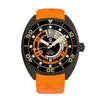
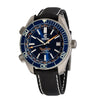
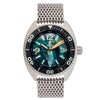
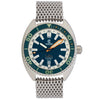
At Ocean Crawler, we build mechanical dive watches around Swiss automatic movements and test them before they leave our workshop. Most current models use the Sellita SW200-1, while some use other movements, so owners should check their specific watch before arranging service.
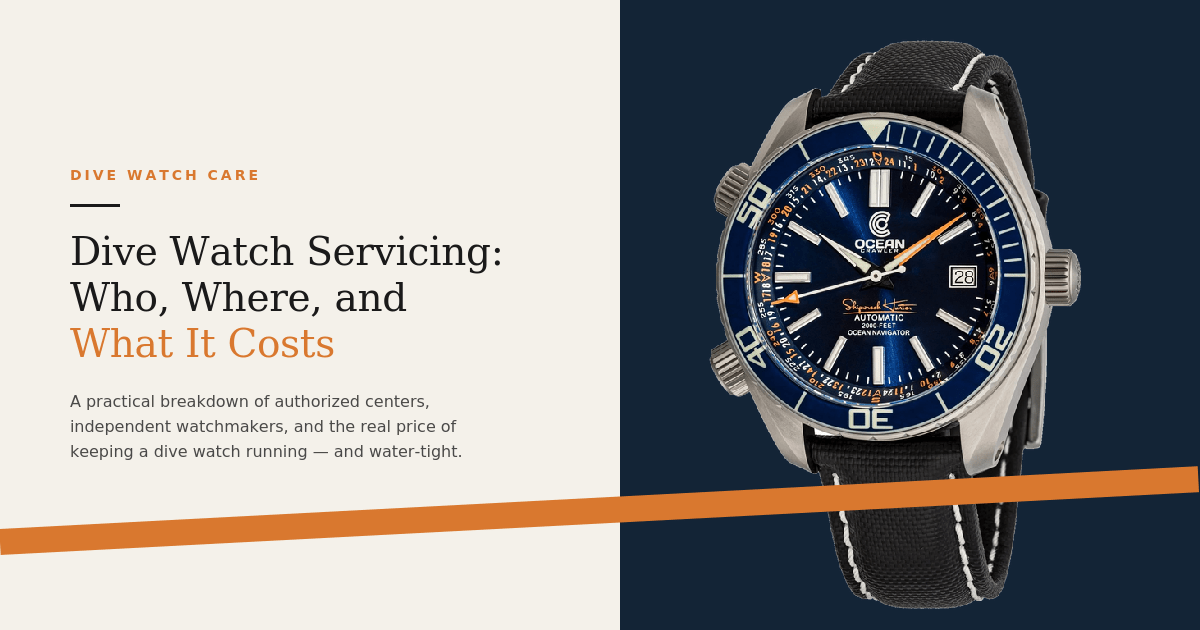
Current Core Diver models list the Sellita SW200-1 and 600-meter/2,000-foot water resistance. The Ocean Navigator lists an STP1-11 movement and the same 600-meter rating.
There is also an important warranty point. Ocean Crawler's current warranty provides five years of coverage for manufacturing defects in materials and workmanship, and the warranty page states that coverage is void if the case back is opened outside an authorized service center. Owners of a watch still under warranty should therefore contact Ocean Crawler before having third-party work performed.
How to Choose a Watchmaker in Charlotte, NC
For Charlotte owners, start with the job your watch needs rather than the cheapest “watch repair” price.
Ask:
-
Have you serviced this movement before?
-
Does the quote cover a full service or only regulation and cleaning?
-
Are gaskets and water-resistance testing included?
-
Are replacement parts billed separately?
-
Will I approve additional work after disassembly?
-
What service warranty do you provide?
For an Ocean Crawler under warranty, check with the brand first. Ocean Crawler's current contact information lists its Charlotte, NC location, and its warranty terms specifically address authorized service.
How to Reduce Long-Term Dive Watch Servicing Costs
The easiest way to control servicing costs is to avoid turning maintenance into repair.
Keep the crown properly secured according to the watch's instructions. Rinse the watch with fresh water after salt-water exposure. Avoid unnecessary shocks and strong magnetic fields. Watch for changes in accuracy and winding feel, and have the water resistance checked before important dives if you are unsure of its condition.
Compare the scope of work, not only the final number. A $250 service that includes movement work, seals, and water-resistance testing can be better value than a $150 service that covers only part of the job.
Key Takeaway
Dive watch servicing cost is driven by the work required, not simply by the fact that the watch is designed for diving. A standard automatic movement may be relatively straightforward to service, while water damage, worn seals, complicated movements, or scarce parts can change the bill quickly.
For Ocean Crawler owners, the specific movement and warranty status should guide the next step. Owners of an in-warranty watch should contact us before having the case opened elsewhere.
For an out-of-warranty watch, a qualified independent watchmaker can be a sensible option when the movement and water-resistance requirements are within that professional's capabilities.
Frequently Asked Questions
How much does it cost to service a dive watch?
A straightforward mechanical dive-watch service in the U.S. commonly falls around $200–$400 as a practical benchmark. Complex movements, premium brands, replacement parts, cosmetic work, and water damage can push the final bill higher.
How often should an automatic dive watch be serviced?
There is no universal interval for every automatic dive watch. The movement, manufacturer guidance, use, environment, and condition all matter. Water-resistance checks can also need to happen more often than a full movement service, especially for watches used regularly in water.
Can any watchmaker service a dive watch?
A qualified mechanical watchmaker can service many dive watches, especially those using common movements such as the Sellita SW200-1. The watchmaker should also be able to inspect seals and perform appropriate water-resistance testing. Warranty work may require an authorized provider.
Does a dive watch need pressure testing after servicing?
A dive watch should be checked for water resistance after service work that affects the sealed case. The exact procedure depends on the watch and the work performed. Passing a test confirms the tested condition; it does not make water resistance permanent.
Is it cheaper to service a watch locally or through the manufacturer?
An independent watchmaker can cost less for a standard mechanical movement, but compare parts, testing, service warranty, and warranty status. Manufacturer service can make more sense for proprietary or complicated watches and warranty-related work.
How much does it cost to repair a water-damaged dive watch?
There is no responsible flat price for water-damage repair. The cost depends on how far moisture traveled, whether corrosion has started, which components are damaged, and whether replacement parts are available. A proper inspection and written estimate should come before repair work is approved.