Aug 18 , 2026
A 44mm watch is not too big when its lug-to-lug span sits inside the flat width of your wrist; that span, not the dial diameter, decides fit. Large cases remain in steady demand: dive watches gain 6.2 percentage points of purchase share every summer, according to Chrono24 (August 2025).
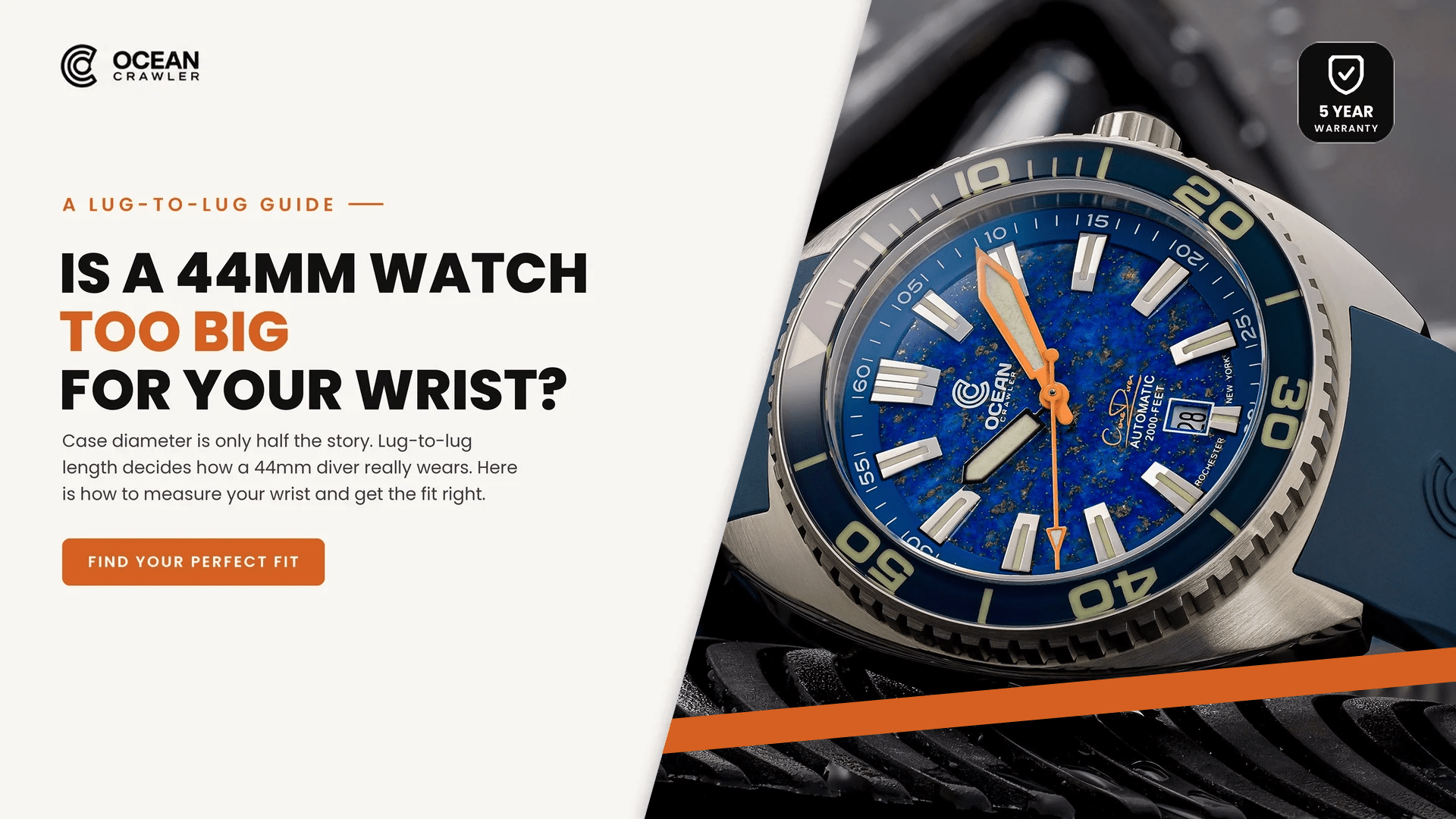
Spec sheets lead with diameter, yet diameter answers almost nothing about wear. Two 44mm watches can fit completely differently once lug design, thickness, and strap enter the equation. This guide covers the measurements that matter, the honest cutoffs for each wrist size, and the numbers behind the cases we build.
Want to test a 44mm case on your own wrist before deciding? Visit the Ocean Crawler store in Charlotte or call 833-712-6133.
What decides whether a 44mm watch fits, the diameter or the lug-to-lug?
Lug-to-lug distance decides whether a 44mm watch fits, because the lugs, not the dial, are the parts that can overhang your wrist. The measurement runs from the tip of the top lug to the tip of the bottom lug, straight down the 12 to 6 o'clock line.
Diameter tells you how much dial you get. Lug-to-lug tells you how much wrist the case occupies. A 44mm case can carry anywhere from roughly 48mm to 54mm of lug-to-lug depending on how the lugs are drawn, which is why two watches with identical diameters wear like different sizes entirely.
The rule is short: keep the lug-to-lug span at or inside the flat width across the top of your wrist. Once the lugs push past that edge, the case tips on the wrist bones, the strap angles awkwardly, and the watch is too big at any diameter.
Diameter still matters for legibility and style. It just never gets the final word on fit.
How do I measure my wrist and a watch's lug-to-lug before buying?
Measure the flat width across the top of your wrist with a ruler, then compare that number with the watch's published lug-to-lug figure. Lay the ruler where a watch head actually sits, just below the wrist bone, and read the edge-to-edge distance in millimeters.
Next, wrap a soft tape or a length of string around the same spot for circumference. Circumference sorts you into a general size band. The flat width sets the hard limit, because that is the surface the lugs must land on.
Then pull the lug-to-lug spec. We publish it on every product page, and any serious maker should. If a listing hides the figure, request it before paying, or scale it from a straight-on photo against the stated diameter.
The verdict takes one line: a span at or under your flat width fits, and a span beyond it overhangs. No exceptions, no adjustment period, no breaking it in.
Which wrist sizes can wear a 44mm watch comfortably?
Wrists of 7 inches (17.8 cm) and above carry a standard 44 mm watch comfortably, and smaller wrists manage one when the lug-to-lug stays at or under 50 mm. That guidance comes from fitting feedback gathered across more than 10,000 customers.
Between 6.25 and 7 inches, treat 44mm as a spec-by-spec check rather than a yes or no. Short, curved lugs keep the span inside your wrist, while long, straight lugs push past it, so the same diameter passes on one model and fails on another.
Under 6.25 inches, most 44mm tool watches overhang, and a 40mm to 42mm case earns the spot instead. Above 7.5 inches, the math flips: a 44 mm head fills the wrist in correct proportion, while smaller cases can start to float and read undersized.
Wherever you land, thickness runs a close second. A tall case on a small wrist wobbles even when the span technically clears.
Why do some 44mm watches wear smaller than 42mm ones?
Some 44mm watches wear smaller than 42mm ones because compact lugs give the bigger dial a shorter overall footprint on the wrist. The fastest way to spot this on a spec sheet is a number we use in fittings: divide lug-to-lug by diameter.
Our Core Diver pairs a 44 mm case with a 50 mm lug-to-lug, a footprint ratio of 1.14. Many 42mm field and dress cases stretch past 51mm through long, straight lugs, a ratio above 1.2. On the wrist, the "bigger" diver occupies less real estate than the "smaller" watch, which is why try-ons keep surprising people in both directions.
Here is every case measurement that shapes wear, ranked by how much it changes the result:
|
Rank |
Measurement |
What it controls on the wrist |
Fit rule for a 44mm case |
Core Diver 44 (verified spec) |
|
1 |
Lug-to-lug |
Whether the case overhangs the wrist's edges |
Keep the span at or under your wrist's flat width. |
50mm |
|
2 |
Thickness |
Slab height, cuff clearance, side-to-side wobble |
Under 16 mm stays stable for a 600 m diver. |
15.6mm |
|
3 |
Diameter |
Dial presence and at-a-glance legibility |
44mm suits tool duty, not a dress cuff |
44 mm, crown excluded |
|
4 |
Lug width and strap |
Visual taper, head-to-band balance |
A 22 mm band keeps a 44 mm head planted. |
22mm |
Read the ratio before any purchase. When lug-to-lug divided by diameter lands near 1.15 or lower, the case wears under its number, and a 44 mm stops being a big watch in any practical sense.
Which Ocean Crawler watches come in 44mm?
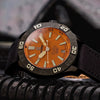
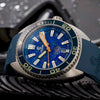
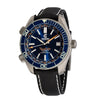
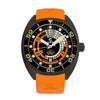
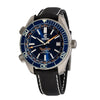
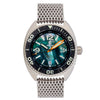
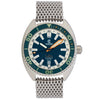
Our 44mm Core Diver lineup is built around exactly the proportions this guide recommends: a 316L stainless steel case at 50mm lug-to-lug and 15.6mm thick, with 22mm lugs, a sapphire bezel, a Swiss Sellita SW200-1 automatic, and 600m (2,000ft) of tested water resistance. The short span is deliberate. It keeps a serious tool watch wearable on average wrists, not just large ones.
At Ocean Crawler, every watch is assembled in the United States by a single watchmaker, then regulated, pressure-tested, shock-tested, and inspected before it ships. Production stays in small batches, and each piece carries a five-year warranty as standard.
That single-watchmaker approach matters for sizing, too. The person who cases the movement also fits the bracelet, so the proportions get checked by hand, not just on a drawing.
Are big watches going out of style in 2026?
Big watches are not going out of style in 2026; the market is splitting between elegant small cases and purpose-built large ones. Chrono24's 2025 Market Recap, published in February 2026, found buyers moving past the bigger-is-better mindset, with demand for rectangular cases up 9.3% year over year.
That shift punishes oversized fashion pieces, not tool watches. A 44mm diver earns its dimensions through function: a bezel you can grip with wet gloves, lume plots large enough to read at depth, and case walls deep enough to house a helium escape valve.
So wear 44 mm as equipment with a job. The style risk was never the number on the case; it was size without a reason behind it.
What makes a 44mm watch feel smaller on the wrist?
A tapered band, a darker dial, and a snug fit make a 44mm watch feel smaller without changing a single case dimension. Fitted rubber hugs the case flanks and pulls the head low, which is why we pair most 44mm models with fitted rubber straps and mesh bracelets.
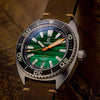
Dial and bezel choices work next. Deep blacks, navies, and greens read visually smaller than bright dials, and a wide rotating bezel shrinks the dial opening the eye actually registers.
Fit tension finishes the job. A ratchet extension clasp lets you tune the band through the day, and a head that cannot rotate always feels lighter and lower than the same head on a loose strap.
Frequently Asked Questions
These five questions come up in our fitting conversations more than any others.
Is a 44 mm watch too big for a 6.25-inch wrist?
A standard 44 mm watch overhangs most 6.25-inch wrists, since many cases this size run 52 mm or longer lug-to-lug. Check the span before ruling the size out: a short-lug 44mm design near 50mm can still sit flat. When the lugs clear your wrist's edges, the watch fits.
What lug-to-lug length fits a 7-inch wrist?
A lug-to-lug length of 50 mm or less clears almost every 7-inch wrist without overhang. Between 50mm and 52mm, fit comes down to how flat or rounded your wrist sits, so measure its top width first. Past 52mm, expect the lugs to shadow the wrist's edges at this size.
Does a 44mm watch look too casual for the office?
A 44mm watch reads as sporty rather than casual, and it works at the office when the profile stays clean. Pick a dark dial, a brushed case, and a tapered bracelet, then save loud bezel colors for the weekend. Thickness matters more than diameter once a shirt cuff enters the picture.
Is 44mm too big for a woman's wrist?
No watch size belongs to one gender, and 44mm follows the same rule as every case: the lug-to-lug span must stay inside the wrist's flat width. Plenty of buyers with slim wrists choose large divers deliberately for presence. Fit is a measurement question, and style is entirely yours.
Why does a 44mm watch feel top-heavy?
A 44mm watch feels top-heavy when the case weight overpowers a loose or lightweight band. Steel heads carry real mass, so a bracelet or a firm rubber strap balances the load, while a slack band lets the head roll outward. Tighten the fit by one clasp position before blaming the case.
So, should you buy a 44mm watch?
Buy a 44mm watch when its lug-to-lug span fits inside your wrist's flat width and the size serves a function you will actually use. That one check settles the question diameter alone never could.
Run the numbers this week. Measure your wrist's flat top, pull the span figure on any case you are weighing, and divide it by the diameter. If the math clears, wear the watch you genuinely want: a properly fitted 44mm diver outlasts every sizing debate on the internet.
Every model in our range of 600m automatic dive watches lists full case dimensions right on the product page, so you can run this check before you spend a dollar.
Still weighing your wrist against a spec sheet? Contact Ocean Crawler at 833-712-6133 or info@oceancrawler.com, or visit us at 5359 Ballantyne Commons Parkway, Charlotte, NC 28277.