Sep 14 , 2026
Dive watches can be considered the most popular type of mechanical watches in use today. Their appeal lies in the robustness, water resistance, and easy-to-read faces. However, despite the popularity of the watches, the most distinctive element of any dive watch (the rotating bezel) is left completely untouched by the average user.
If you ever take a glance at the numbered ring encircling your watch crystal, only to wonder about its true purpose, rest assured that you are not alone.
Here is the simple explanation on how to use a dive watch bezel:
In order to measure elapsed time, rotate the bezel counter-clockwise until the zero point, which is a luminous triangle, aligns itself precisely with the position of the minute hand. As time goes by, the minute hand moves around the dial, and all you need to do is observe the place on the bezel marked by the minute hand. This will show you the number of elapsed minutes.
This is because a dive bezel moves only counterclockwise, and an accidental move would show that more time has elapsed rather than less. This is a very important safety mechanism that would help prevent divers from misjudging the time spent below water.
In this article, we will be discussing the functioning of a dive watch bezel, reading its marking, the importance of the unidirectional bezel, and the usage of the mechanical device for daily chores outside the water.
What Is a Dive Watch Bezel?
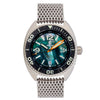
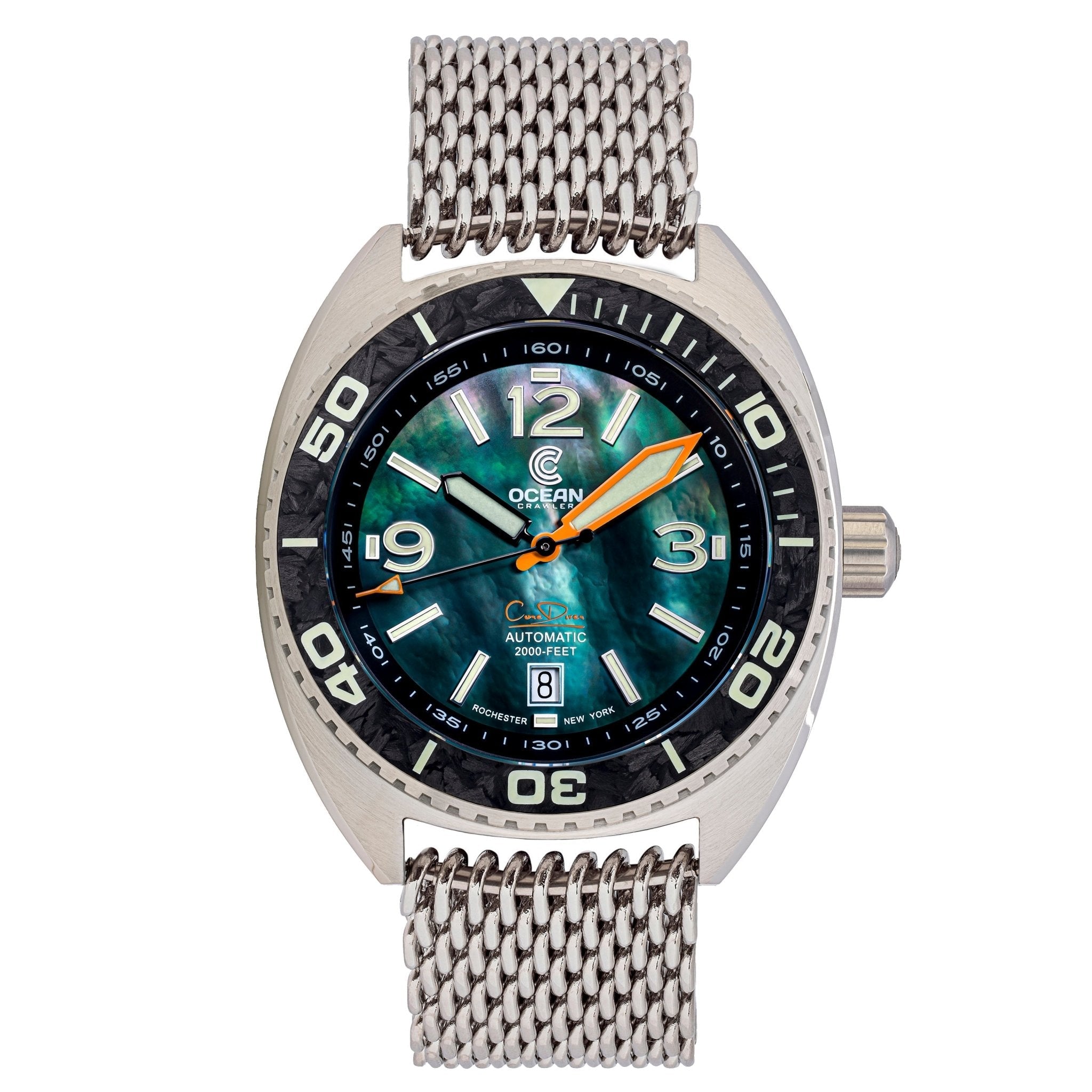
The bezel of a watch is a ring of metal around the crystal and dial of the watch. Although some bezels are stationary and just serve as decoration, the bezel of a dive watch is an external, rotating metal ring used to measure time.
In the past, when digital dive computers had not been invented yet, divers required an effective way of monitoring their "bottom time," which is the period of time spent by the diver under water, between the start of the dive and the start of the ascent back to the surface.
In order to address this problem, the watchmakers came up with an external rotating bezel with markings for minutes from 0 to 60. When the beginning of the scale is lined up with the minute hand of the watch, a diver converts his regular three-handed watch into an easy-to-read stopwatch.
In accordance with the ISO 6425 standard, which is an internationally recognized one and specifies what can be considered a diver’s watch, a dive watch should have a time-preselecting device, for example, a rotating bezel, which is safeguarded against accidental turning. To date, despite the fact that modern divers use electronic dive computers, the mechanical rotating bezel is still an important backup feature.
How To Use a Dive Watch Bezel Step by Step
It is extremely easy to use a dive bezel. It does not need batteries, pressing any buttons or navigating any menus. It is just a simple process of aligning the watch hands.
Here are the steps of timing an event through your rotating bezel:
-
Finding the Zero Marker: Identify the main zero marker in your bezel. This is commonly a triangular shape, luminescent dot or hash mark placed at the 60/0 point on the bezel.
-
Reading the Position of the Minute Hand: See where the minute hand currently stands on your watch face.
-
Moving the Bezel: Hold the bezel and move it counterclockwise until the zero marker lines up with the minute hand.
-
Reading the Elapsed Time: That's all there is to it. As the minute hand moves forward, it automatically indicates the number of elapsed minutes on the bezel’s outside ring.
A Practical Timing Example
If you wish to measure a time period of 15 minutes, and your minute hand is currently at the number 4 position on your dial, which means it is 20 minutes after the hour mark.
First, rotate your bezel such that your zero position comes at the number 4 on the dial. Your bezel is now "zeroed out." Over time, the minute hand would move forward. Once the minute hand is at the 7 position on your dial (i.e., 35 minutes after the hour mark), your minute hand will be pointing right at your "15" marked position on your bezel.
Why Does a Dive Watch Bezel Only Turn One Way?
If you attempt to turn a genuine diving watch bezel in a clockwise direction, you would not be able to do so. This is because the watch bezel is designed with a ratchet click-spring system, which makes it turn only in an anticlockwise direction.
This is not a defect in the design but a very important lifesaving feature.
It is very easy for the diver to bump into the watch during his exploration of the wreck while moving through the seaweed or even when he is handling the scuba gear. In case the watch bezel is bidirectional (able to rotate in any direction), a bump could move the zero point clockwise.
With the shift of the zero marker in the clockwise direction, the minute hand would look like it is much closer to the zero marker than it really is. Consequently, the watch would show the diver a false time period, making them think they have more time left than they really do.
Since the uni-directional bezel can rotate only counterclockwise, any unintended movement will move the zero position backward. This would mean that the minute hand of the watch will indicate a higher number on the bezel. The watch will give a reading of more elapsed time compared to what actually is the case.
In underwater diving, an error that makes one come up from underwater earlier than expected is a safer option. This is because of the unidirectional principle, which ensures that the dive watch is designed for safe failure. Our dive watches at Ocean Crawler have a sturdy unidirectional rotating mechanism of 120 clicks.
What Do the Bezel Numbers Mean?
Understanding the markings on a dive bezel is essential for reading it correctly. Although there may be slight variations in design between different brands, the layout is essentially standardized and highly readable.
The Luminous Zero Marker
The most crucial mark on the bezel is the zero point. The reason is that light does not travel easily through deep waters, and visibility becomes very difficult when diving. In order to overcome this problem, the zero point is generally filled with a highly luminous substance like Super-LumiNova.
By matching this highly visible mark with the luminous minute hand, one gets an immediate point of reference.
The 0–60 Minute Scale
The bezel is broken up into 60-minute marks similar to the layout on a watch face. The numbers are generally high, contrasting against the bezel insert, such as very white numerals against a dark sapphire/ceramic insert, in order to maximize visibility. There are generally large Arabic numerals indicating every 10-minute mark: 10, 20, 30, 40, and 50.
The 15-Minute Track
It will be common for you to find that for the first 15 to 20 minutes of the dive bezel there are individual hash marks for every minute, but from that point onward there are hash marks every five minutes on the bezel.
This unique scale was previously developed in order for the divers to be able to make decompression stops as they ascend to the surface. The decompression stops generally take precise minute-by-minute timing (for instance, spending three minutes at a certain depth before moving up further).
Dive Bezel vs. Other Watch Bezels
Rotating bezels aren't used exclusively for diving. When evaluating different watch designs, it's necessary to consider what each bezel was designed to measure.
|
Bezel Type |
Main Purpose |
Rotation Mechanism |
|
Dive Bezel |
Tracking elapsed time (usually 0-60 minutes). |
Unidirectional (counterclockwise only). |
|
GMT Bezel |
Tracking a second or third time zone (usually 24-hour scale). |
Bidirectional (turns both ways) or fixed. |
|
Tachymeter |
Measuring speed based on time traveled over a fixed distance. |
Fixed (does not rotate). |
|
Compass Bezel |
Determining navigational direction using the sun. |
Bidirectional (turns both ways). |
Can You Use a Dive Bezel for Things Other Than Diving?
Yes, in fact, many dive watch owners only use their bezel while on dry land. This is because the bezel is nothing more than an extremely resilient analog timepiece, which makes it incredibly handy in day-to-day situations.
Everyday uses for a dive watch bezel can include:
-
Cooking: Cook steak, watch boiling pasta, or keep track of baking times without having to arrange your phone.
-
Parking Meters: To easily know how much of your hour is left, line up the zero indicator with the minute hand when paying for parking.
-
Work Intervals: Utilize the bezel in order to apply the Pomodoro method, which means 25-minute work intervals.
-
Laundry: Count washing and drying cycles fast.
-
Working out: Count rest intervals between sets or track the duration of a run.
The feeling of turning a mechanical bezel is very pleasurable, and referring to one’s wrist is much quicker than digging through one’s pocket for one’s smartphone.
Common Misconceptions About Dive Bezels
Due to its analog nature, a number of misunderstandings that pertain to the functionality of the dive bezel persist.
Misconception 1: The bezel tells you how much air you have left.
Fact: The dive watch bezel just calculates the elapsed time. This does not connect to your diving tank. Although the elapsed time is one of the parameters used to calculate gas usage, the bezel cannot measure the air pressure.
Misconception 2: The bezel tracks your depth.
Fact: The bezel does not have anything to do with depth. The depth can be measured using a different tool known as a depth gauge or dive computer.
Misconception 3: The bezel counts down to zero.
Fact: A traditional dive bezel is an elapsed time calculator since it starts at zero and goes on increasing with time. It is lined up to the current time and gives the sum of minutes elapsed. (Remember that there are indeed count-down bezels for certain aviator and regatta watches.)
Misconception 4: A dive bezel replaces a dive computer.
Fact: In the 1960s, the dive watch served as an important tool. Currently, divers use electronic dive computers to monitor time, depth, and nitrogen level at the same time. The dive watch has become a back-up tool in case the electronics fail.
To Conclude
Learning how to operate a bezel of a dive watch makes your watch not only an aesthetically pleasing accessory but also a very useful one. With just a quick synchronization of the zero marker and the minute hand, you can make yourself a waterproof stopwatch, which will be handy both in scuba diving and in cooking steaks.
The unidirectional and anticlockwise movement is proof of the lifesaving nature of the engineering principles of horology and is designed such that it ensures that the watch will never fail you in any way.
We at Ocean Crawler understand how important it is for our watches to function in harsh underwater conditions; therefore, we design our bezel such that it provides perfect alignment, superior luminescence and a very good grip even while wearing thick diving neoprene gloves.
If you are in search of a timepiece that can combine precision in engineering with toughness, consider our range of automatic dive watches.
Frequently Asked Questions
How do you use a dive watch bezel?
To operate the bezel of a dive watch, turn the outer ring anti-clockwise until the marked zero reaches the place where the minute hand is. To check the elapsed time in minutes, note down the minute that the minute hand points at on the bezel.
Why does a dive watch bezel turn only one way?
The mechanism for the rotating bezel on a diving watch is unidirectional (counterclockwise) for safety purposes. If the rotating bezel is accidentally knocked while diving, the mark moves backward, which will indicate that more time has passed. This ensures that the diver does not underestimate the time left until the decompression limit is reached.
What does the triangle on a dive bezel mean?
The triangle on the bezel of a dive watch serves as the starting point for the time calculation. The triangle is often coated with phosphorescent substance that makes it glow brightly under water, which enables the diver to position it next to the minute hand.
Can you use a dive bezel for everyday timing?
Yes, the dive bezel is indeed a robust mechanical timer. The dive bezel can be used to time your everyday activities such as cooking, metering the parking meter, doing laundry, or any other activity that requires timing. It only needs to be aligned with the minute hand.
Can a dive bezel replace a dive computer?
Certainly not, as a dive bezel can never replace a dive computer. While a dive bezel simply counts elapsed time, the dive computer calculates time, depth, rate of ascent, and nitrogen uptake. In our present times, the mechanical dive watch acts as an independent back-up for the dive computer.
What does a unidirectional bezel mean?
A uni-directional bezel refers to the watch band that can rotate in one direction, which always is the counterclockwise rotation for a diver’s watch. This watch works using the mechanical spring that prevents rotation in the clockwise direction.
How do you read the minutes on a dive bezel?
You will determine the minutes elapsed by checking the figures marked on the bezel ring. You will need to match the zero with the minute hand first, then watch for a period of time to pass. If the minute hand points directly to the figure "20," 20 minutes have elapsed.